Navigating Employee Termination: A Step-by-Step Guide to Legal Risks and Financial Consequences

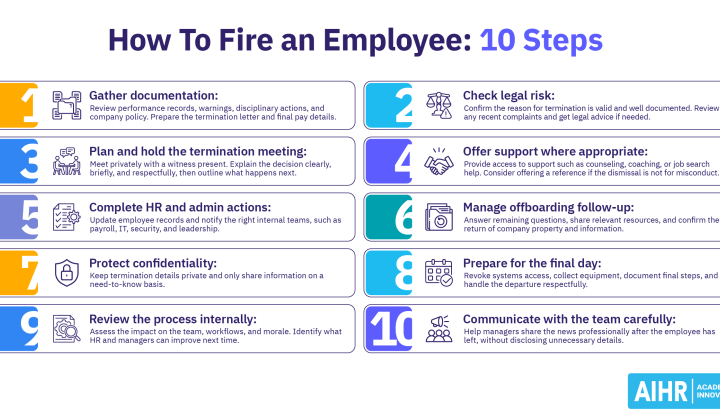
The Employee Termination Process
According to AIHR: Terminating an employee is a complex and sensitive procedure that many managers find deeply uncomfortable. Research indicates that approximately 71% of managers feel uncertain when carrying out a dismissal. For a U.S. audience, it's crucial to understand that the 'at-will' employment doctrine applies in all states except Montana, generally allowing employers to terminate employees without a specific cause. Nonetheless, common and legitimate grounds for termination include:
- poor performance
- sexual harassment
- theft or fraud
- safety violations
- attendance issues
- substance abuse
- disrespectful conduct
Conversely, there are illegal grounds for dismissal, such as discrimination based on race, ethnicity, religion, sex, sexual orientation, age, or disability; retaliation for complaints; using legally protected leave; or participating in union activity. Ensuring a termination is lawful requires meticulous adherence to a ten-step procedure. This process involves preparing documentation, assessing legal risks, conducting the termination meeting, providing support and resources, organizing post-termination procedures, and maintaining confidentiality.
The Financial Impact of Termination
Beyond the legal complexities, dismissing an employee carries significant financial implications for an employer. The average cost to hire a new employee is around $4,700. In a specific case, terminating a programmer with a $175,000 annual salary and four years of service could lead to a total cost reaching $285,510. These potential expenses encompass:
- severance pay
- unemployment insurance taxes
- replacement and recruitment costs
- legal fees
- onboarding and training costs for new hires
Therefore, the employee termination process is not only emotionally challenging but also financially burdensome, underscoring the critical importance of complying with all legal requirements and preparing thoroughly.
Given these factors, employers should pay particular attention to executing the termination process correctly to avoid potential legal risks and financial losses. Effective management of this procedure can not only mitigate negative consequences but also protect the company's reputation.
A solid grasp of the legal framework and careful preparation can significantly ease this difficult organizational transition.
Understanding the intricacies of employee termination is essential, especially when it comes to ensuring compliance with legal standards. Crafting a termination letter that adheres to legal requirements can help mitigate risks associated with the dismissal process. To learn more about the key elements of a legally sound termination letter, refer to our detailed guide on drafting effective termination correspondence.

Read also