A Staggering 80% of Employees Miss Out on Critical Feedback

Why Employee Reviews Matter
According to AIHR: Employee reviews serve as a vital HR tool, helping to sustain workforce engagement and track performance over time. Research shows that among workers who receive meaningful feedback, 80% report being fully engaged at their jobs. Yet a Gallup survey reveals that only 21% of employees say their manager provided such feedback within the past week. This gap underscores the need for regular, constructive feedback as part of the review process.
Review Functions and Template Options
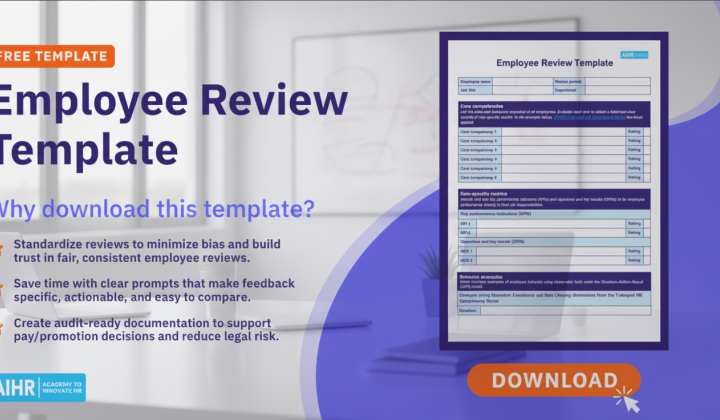
An effective employee review fulfills five core purposes: aligning expectations, delivering feedback, setting new goals, supporting pay and promotion decisions, and documenting performance. To make reviews impactful, using the right template is essential. A well-designed review template includes 10 key components:
- employee details
- rating scale
- core competencies
- role-specific metrics
- behavioral examples
- goals
- development plan
- employee comments
- confidentiality statement
- signatures and dates
Seven distinct review templates exist to suit different scenarios: performance review, annual review, 90-day review, 360-degree feedback, employee self-assessment, manager review, and peer review. This variety enables HR professionals to select the most appropriate format for each situation. A free review template is available in Word, Excel, and PDF formats, making it easy to access and use.
For HR practitioners, key practical recommendations include:
- gathering data
- selecting the right template
- writing behavior-based feedback
- structuring the response
- using ratings supported by evidence
- setting SMART goals
- preparing for the conversation
- conducting the meeting collaboratively
- tracking progress
- complying with legal requirements
When crafting feedback, consider this contrast: 'Missed three project deadlines this quarter, which delayed the client launch' serves as a constructive comment, while 'has poor time management' is an example of ineffective feedback.
The importance of employee reviews is further highlighted by the fact that 88% of organizations are concerned about employee retention. Implementing high-quality reviews can therefore become a key factor in boosting engagement and satisfaction levels within a company.
In today's competitive talent landscape, effective employee reviews are more than just a performance assessment tool-they are a strategic asset for organizational growth. A systematic approach to feedback can significantly improve retention rates, which in turn drives overall business success. By embedding regular reviews into their culture, companies can foster openness and support, enhancing team morale and cohesion.
In light of these findings, it’s crucial to recognize how many organizations struggle with effective employee development strategies. A recent survey indicates that a significant percentage of business leaders acknowledge failures in this area, highlighting the urgent need for improved feedback mechanisms to enhance workforce engagement and retention.

Read also