Trump's Nuclear Gambit: Why the Zaporizhzhia Nuclear Power Plant Became the Key to the 'Peace Plan 2026'

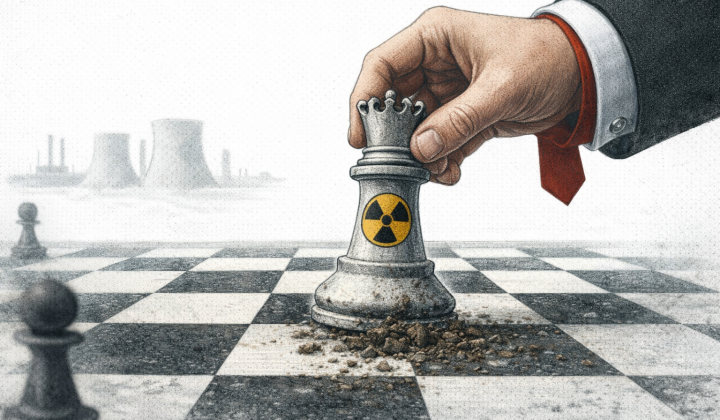
The Zaporizhzhia NPP has ceased to be just a military facility and has transformed into the main asset in negotiations between Donald Trump and the Kremlin. While the world discusses the general outlines of a 'freeze', behind the scenes, a fierce struggle for control over the largest energy hub on the continent is underway.
Business Interests Behind the Politics
For Donald Trump, the 'Peace Plan' is not charity but a large-scale business project. Key players in the American energy sector, such as Westinghouse and Holtec International, see Ukraine as a springboard for expanding their technologies in Europe.
The technical foundation: Even before the full-scale invasion, Ukraine conducted a unique operation to diversify. Currently, 4 out of 6 power units of the Zaporizhzhia NPP (No. 1, No. 3, No. 4, and No. 5) have been technically switched to American fuel. The station is already halfway integrated into the Western technological chain, and Trump sees it as a legitimate zone of U.S. interests. For 'Rosatom', this is a technological deadlock: servicing American assemblies requires Western licenses and software, which Russia lacks.
Restarting the Negotiation Track: From Politics to Military Pragmatism
The February negotiations in Abu Dhabi showed that the issue of the Zaporizhzhia NPP is the most 'hot' point. Trump proposed an 'energy protectorate' model, essentially removing Russia from managing the facility.
Against this backdrop, a fundamental restructuring of Ukrainian diplomacy took place. The era of 'manual control' ended in late 2025 amid personnel changes and scandals. According to Decree No. 72/2026 dated January 23, 2026, the negotiation process is now officially led by Rustem Umerov, who holds the position of Secretary of the National Security and Defense Council. The updated group, which worked in Mar-a-Lago from February 10 to 12, also included:
Kirill Budanov - in the status of head of the President's Office, to which he was appointed on January 2, 2026, replacing Andriy Yermak;
Andriy Hnatov - Chief of the General Staff of the Armed Forces;
Alexander Bevz - advisor to the Office of the President of Ukraine;
David Arahamia - People's Deputy of Ukraine, head of the 'Servant of the People' faction in the Verkhovna Rada.
For Trump's team, this is a 'deal with the security forces', rather than with political advisors. The agenda in Florida is maximally specific: nuclear security in exchange for investment preferences.
Real Deadlines: February vs. June
Despite the media tie to the date of February 24, the official deadline for the 'finalization' of the peace track is set for June 2026. February will only be a point of fixation of the 'framework agreement', where the issue of control over the Zaporizhzhia NPP and the economic recovery plan will be outlined as basic conditions.
Control over the Zaporizhzhia NPP for Trump is not only a matter of security but also of personal prestige as a 'deal maker'. If he manages to return the station under the 'American wing', it will pose a significant challenge to the dominance of 'Rosatom' in Eastern Europe.

Read also