From Trypillian Hearths to 20th-Century Dugouts: How Ukrainians Endured the Cold

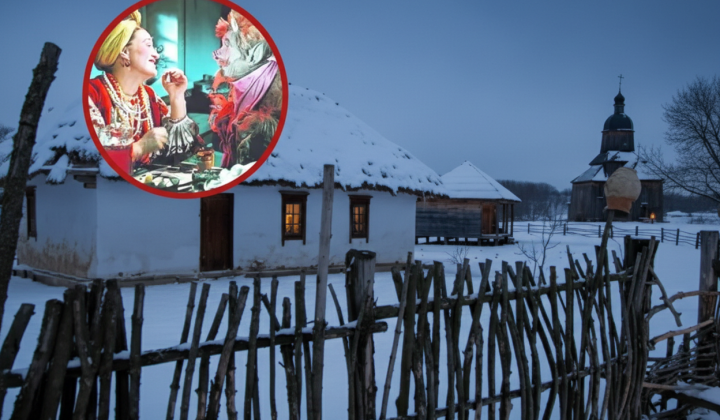
From Ancient Hearths to Modern Heating: Ukraine's Millennia-Long Battle Against Winter
According to Главком: For thousands of years, the people of Ukraine have developed ingenious methods to survive harsh winters, creating a rich history of adaptation. This struggle against the cold spans from the ancient Trypillian culture to the mid-20th century, encompassing heating techniques, home construction, and the production of specialized clothing and footwear.
One of the earliest solutions was the Trypillian stove, which could cover an area of 4 square meters or more. Trypillian houses were wooden structures insulated with reeds and coated with clay for thermal protection. Centuries later, between the 5th and 6th centuries, tribes of the Penkovska culture, known as the Antes, also utilized earthen shelters like dugouts and semi-dugouts for warmth.
In Ukrainian homes, 'black' or smoke-fired heating was common until the 18th century. In the Polissia region, houses with such stoves were still found at the start of the 20th century, while chimneys only became widespread in central Ukraine likely in the latter half of the 19th century. An intermediate design was the semi-smoke stove with a hood. Typically lit early in the morning, the stove would retain heat throughout the day, and it was common for entire families to sleep on it until the 1960s.
Heating Traditions and Technologies
Distilleries also played a surprising role in rural life. By the second half of the 18th century, there were over 10,000 small distilleries, or *guralnias*, in Ukraine, providing the population with vodka. The profit from distilling often exceeded that from selling grain. In 1860, Mykola Markevych described simple infusions made by adding ingredients like galangal and anise to 20-proof vodka. Clothing production was equally vital, with Ukrainians sewing their outerwear from sheep raised on their own farms.
- Traditional sheepskin coats, or *kozhukhy*, lasted 10-15 years before being re-dyed, and a belt was an essential part of the traditional outfit.
- The oldest preserved rural tile stove with Kosiv painting, made in the 1880s, is kept in the town of Kolomyia.
- In Kyiv, the 'Ginzburg Skyscraper' was built in 1912.
- The mass implementation of district heating networks only began in 1948.
- During post-war reconstruction in 1944, approximately 50,000 people in Kyiv lived in dugouts.
This history of enduring the cold showcases Ukrainian ingenuity and adaptation to a challenging environment, marking a significant aspect of the nation's cultural heritage and daily life.
This overview of heating history in Ukraine demonstrates how its people adapted to severe climatic conditions by developing new technologies and methods. Traditional heating methods, such as smoke stoves and earthen shelters, became crucial elements of everyday life, reflecting the cultural and economic aspects of Ukrainian society.

Read also