Venus' Harsh Sulfuric Acid Clouds May Support Stable Peptides, Bolstering the Case for Life

Remarkable Stability Amid Extreme Acidity
According to НВ — Техно: Scientists from the Massachusetts Institute of Technology have demonstrated that peptides can maintain their structural integrity for weeks when exposed to sulfuric acid conditions similar to those found in Venus’ atmosphere. This discovery strengthens the argument that life could potentially exist within the planet’s cloud layers. In laboratory simulations mimicking Venusian clouds, peptides such as HHQ, HHQ13, and K7 retained well-defined structures for several weeks in a solution containing 98% sulfuric acid by mass.
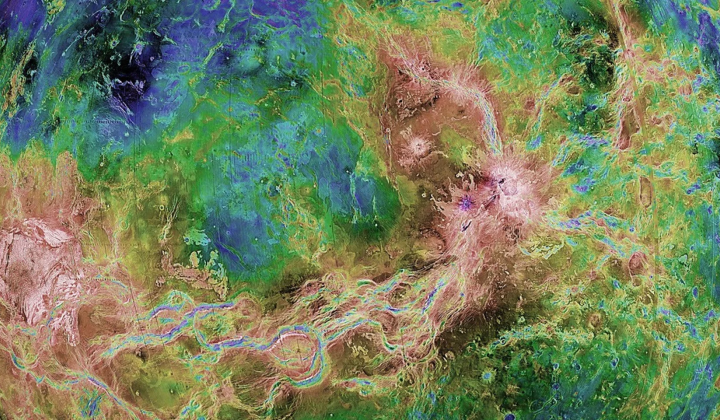
Venus is enveloped by thick clouds of sulfuric acid and experiences surface temperatures high enough to melt lead, posing what seem to be extreme obstacles for life as we know it. Yet, this new research reveals that peptides immersed in sulfuric acid remain stable, suggesting that the lack of water-a factor previously considered essential for life-may actually contribute to their resilience in such an environment.
Expanding the Horizons of Planetary Biology
Previous work by planetary scientist Sara Seager and her team has shown that lipids, amino acids, and nucleic acids can also endure under similar harsh conditions. Published in the Proceedings of the National Academy of Sciences, her research complements these latest findings.
"We truly do not yet understand the full diversity of planetary environments that exist." Sara Seager
In light of this, NASA astrobiologists hypothesize that microbes could survive within Venus’ cloud layers. Researcher Mei Hong emphasized, "If peptides enter these clouds of concentrated sulfuric acid, they are likely to persist stably within the acidic droplets."
These results open promising new avenues for exploring the possibility of life beyond Earth, challenging the long-held belief that life can only thrive in Earth-like conditions. The identification of stable biomolecules in Venus' extreme atmosphere urges scientists to deepen their studies of such environments not only on Venus but also on other planets. This could fundamentally reshape our understanding of where life might exist within our Solar System and beyond.
As researchers delve deeper into extreme environments, understanding how life might thrive in unusual conditions becomes increasingly vital. For instance, a recent study highlights how Red Sea bacteria harness energy without oxygen, leaving behind metal traces. This discovery complements the ongoing exploration of life in harsh atmospheres like that of Venus, expanding our knowledge of potential habitats beyond Earth.

Read also