Marble group of Asclepius and Telesphorus: a find in ancient Aspendos

Ancient sanctuary at the city gates
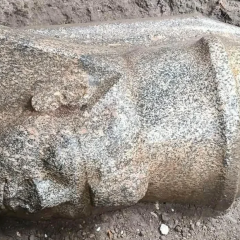
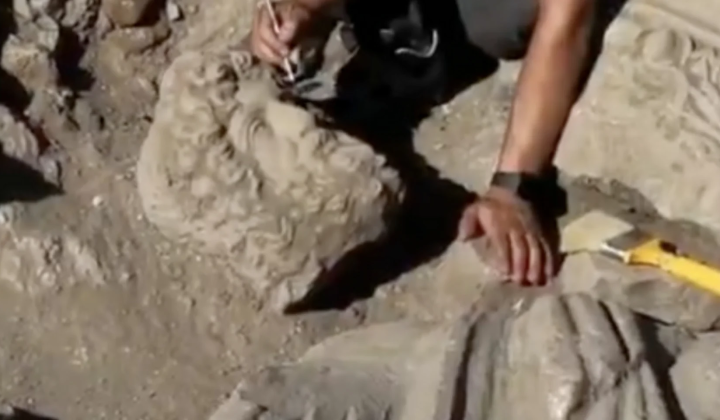
According to НВ — Техно: Turkish archaeologists discovered a marble statue of Asclepius, the god of healing, along with a sculptural representation of his son Telesphorus. This occurred beneath the ruins of the gates in ancient Aspendos, in an area open to the public. The event has already been called an important proof that the cult of Asclepius here had a public character. On August 7 at 09:30, Turkey's Minister of Culture and Tourism Mehmet Nuri Ersoy announced the find on social media.
The statue was found in the northern wing of the Monumental Gates, in the so-called Eastern Square of Aspendos, which opens onto Theater Street. The city itself is located in the Antalya province. The height of the marble group is approximately 2.20 meters. Asclepius is depicted as a mature man: he stands with his weight on his left leg, while his right is slightly bent and stepping forward. A himation is draped over his left shoulder. At the feet of the god is a smaller figure of Telesphorus, dressed in a long robe with a hood that almost entirely covers the details of his body.
A rare specimen from the Roman era
Until now, direct material evidence of the worship of Asclepius specifically in Aspendos has been scarce. This case is therefore particularly valuable: Asclepius and Telesphorus have survived together and almost intact, which is rare. Ministry specialists believe that the features of the stone processing reveal the work of sculptural workshops from the Roman period, rather than a later forgery. The statue is commonly dated to the end of the 2nd century AD; it is associated with the construction of the theater during the reign of Marcus Aurelius.
The most famous healing sanctuaries of Asclepius in the ancient world were located in:
- Epidaurus
- Pergamon
Previously, on Theater Street, which connected the acropolis of Aspendos with the Roman theater, a mosaic from the 3rd century AD had already been found. It depicts the youthful personification of the river Eurymedon. Aspendos thus emerges as an important center of religious and cultural life in the ancient world, and the new find allows for discussions about the developed public practice of worshipping the god of medicine in this region. It provides material for further study of the architecture and cult traditions of the Roman Empire.

Read also