A curved wooden throwing stick, boomerang-like in shape, has been uncovered by archaeologists in France

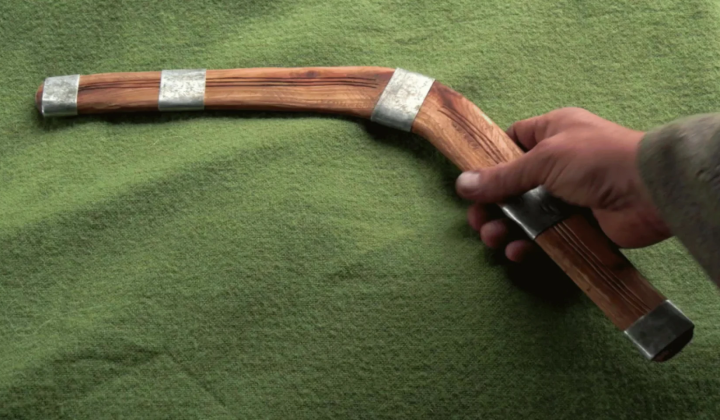
Artifact Found at Urville-Nacqueville
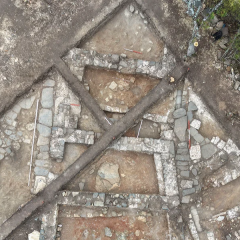
According to НВ — Техно: Archaeologists working at the Iron Age settlement of Urville-Nacqueville in the Manche region of France have uncovered a curved wooden throwing stick with a shape reminiscent of a boomerang. The object dates to roughly 120–80 BC and is thought to have been used for hunting, possibly targeting waterfowl. It was discovered in a ditch near ritual deposits, indicating that it held importance for the people of that era. The find adds to our understanding of late Iron Age hunting practices across northwestern Europe.
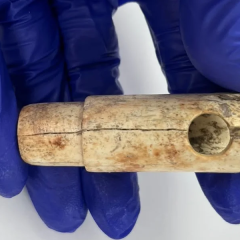
The settlement was a coastal community with connections to cross-Channel maritime trade. The throwing stick has a wingspan of roughly 54 cm and was made from a single branch of a tree belonging to the apple family. Its surface displays three parallel grooves, and iron strips appear at several locations, likely as reinforcement or repair. The edges bear signs of wear and impact, suggesting the stick was launched many times.
Thanks to waterlogged soil, the wooden weapon survived without rotting for more than 2,000 years. Experimental research indicates that its shape may have produced a curved flight path. The stick was found in a ditch alongside a horse pelvis, a dog skull, and fragments of whale rib. Remains of several waterfowl species at the settlement further support the idea that it was a hunting implement.
Significance of the Discovery
Similar throwing sticks from the Iron Age have previously been found in the Netherlands and Germany, showing that such items formed part of a wider European tradition. Scholars connect this weapon with the Latin term 'cateia' and stress that it was not a returning boomerang but a projectile used in hunting. The Urville-Nacqueville find offers fresh insight into the daily life and material culture of these ancient communities.
This discovery at Urville-Nacqueville provides vital evidence about Iron Age technology and hunting practices in the territory of present-day France.
It confirms that ancient peoples were using sophisticated thrown tools in everyday activities, and it highlights the cultural connections they maintained with other European groups. The study of such objects helps researchers understand social structures and economic practices among Iron Age populations.

Read also