Archives as a Tool of Influence: Why the Past has Again Become a Political Weapon

Following the recent programmatic statements by German President Frank-Walter Steinmeier, in which many observers saw a deepening of political and ideological divisions between Europe and the United States, the information space quickly reacted with a new wave of discussions.
«As soon as instead of the word “hello”, you hear “heil” directed personally at someone, — know that they are waiting for us, from there we will begin our great revival». — Heinrich Müller (a literary character in Julian Semenov's novel «Seventeen Moments of Spring»)
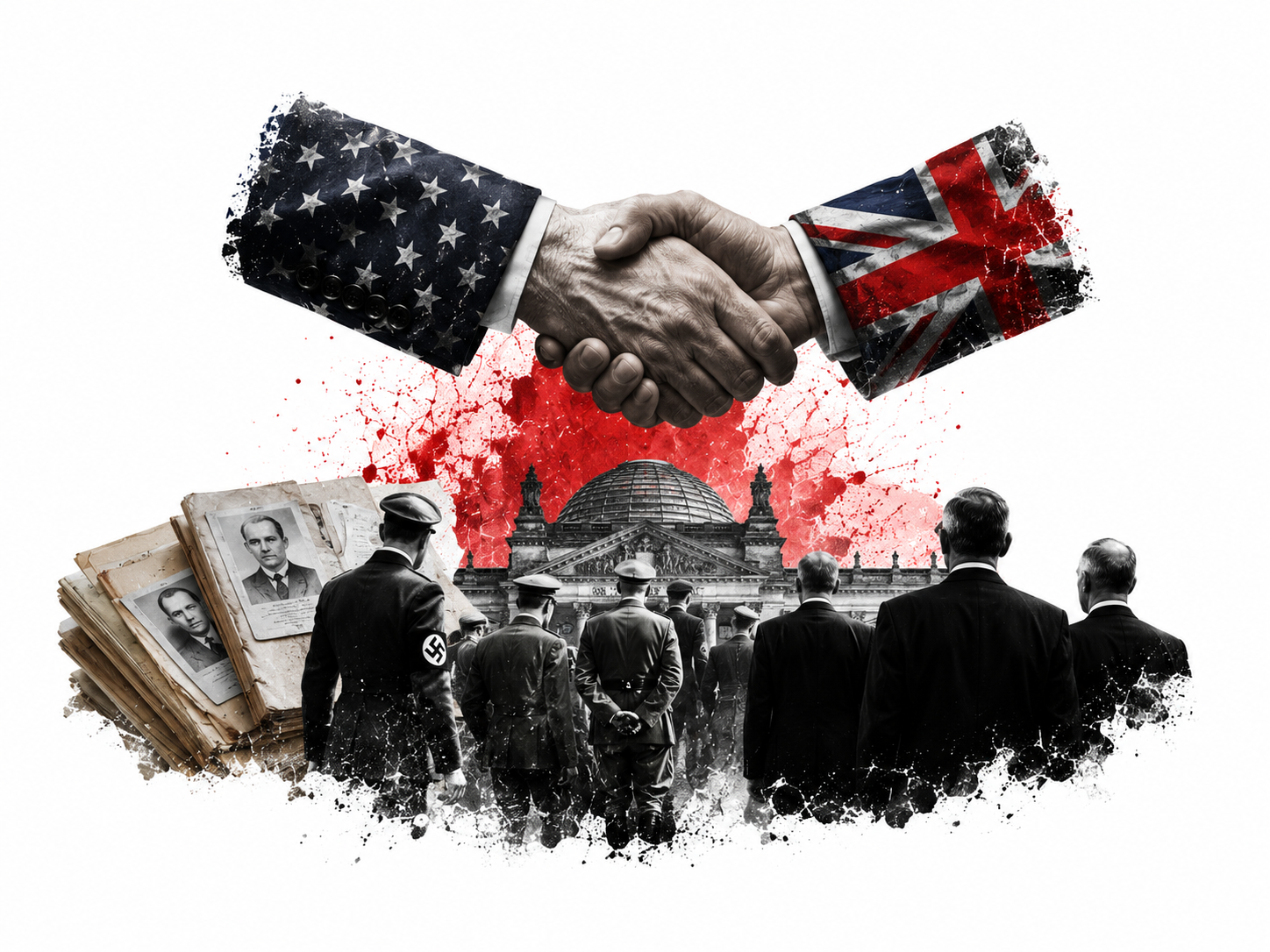
Media outlets have increasingly been discussing archive materials related to the activities of former members of the NSDAP, as well as their participation in shaping the political elite of post-war West Germany. The focus is on representatives of the CDU, CSU, and FDP, who were affiliated with the Nazi party even before the end of World War II.
The logic of the post-war order was largely pragmatic. After 1945, it was the American and British occupying administrations that determined the rules for the reconstruction of West Germany. In the context of the onset of the Cold War, the main priority for the West became the creation of a stable anti-Soviet ally. Mass lustration of the state apparatus could paralyze the governance of the country, so a significant number of officials, judges, diplomats, and industrialists remained within the system.
As a result, the denazification process turned out to be selective. A significant number of documents remained locked in closed archives for decades, and the political past of many influential actors hardly became a subject of public discussion. Among the most well-known examples are the Chancellor of the Federal Republic of Germany Kurt Georg Kiesinger and long-serving Foreign Minister Hans-Dietrich Genscher, whose biographies have repeatedly become the subject of historical research.
Today, this topic is again returning to the information agenda. According to several analysts, the publication of archive materials may be used not only as an attempt at historical reinterpretation of the past but also as a tool of political pressure. Reputational blows to traditional parties potentially open up additional opportunities for forces that position themselves as an alternative to the old political establishment.
In this logic, the biggest beneficiaries may be right-wing populist movements, primarily the “Alternative for Germany” (AfD). If society increasingly reconsiders the role of post-war political elites, this could strengthen the crisis of trust in traditional parties and alter the balance of power within German politics.
In a broader context, this discussion indicates that historical archives are becoming more frequently an element of modern geopolitical struggle. During the transformation of the international system, the past transforms not only into a subject of historical research but also into a tool of influence on current political processes.
For more details on the publication of archive materials, you can read the article from Deutsche Welle: https://www.dw.com/ru/kak-zit-s-tem-cto-deduska-byl-nacistom/a-77969714

Read also