Third Galaxy Without Dark Matter Discovered by Astronomers

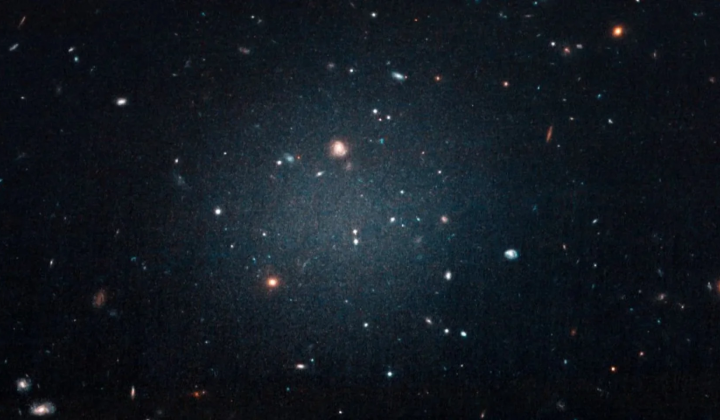
Discovery of Galaxy DF9
According to НВ — Техно: On June 22 at 14:30, astronomers announced the detection of a third galaxy, designated DF9, which also lacks dark matter. This finding confirms the existence of a chain of three such objects, including galaxies DF2, DF4, and DF9. The identification of these galaxies strengthens the hypothesis that they formed as a result of a head-on collision between dwarf galaxies.
The galaxies DF2, DF4, and DF9 are exceptional because they contain no dark matter. The first of these, DF2, was discovered in 2018, and a second similar galaxy, DF4, was reported a year later. In 2022, scientists determined that DF2 and DF4 belong to a narrow linear chain consisting of about a dozen galaxies. Research conducted in 2025 revealed that all these galaxies move through space in an identical manner. DF9 shares comparable size, brightness, and number of star clusters with DF2 and DF4. The study also showed that DF9's motion can be explained without invoking dark matter.
Significance of Dark Matter
Dark matter remains one of the greatest mysteries in modern science. Estimates suggest that dark matter is roughly five times more abundant than ordinary matter. Michael Keim, an astrophysicist at Yale University, stated:
“Almost every galaxy in the universe is dominated by dark matter. But DF2, DF4, and now DF9 appear to be exceptions.” - Michael Keim
He added: “The results provide some of the strongest evidence that these galaxies formed together during a powerful event that separated ordinary matter from dark matter.”
Additionally, study co-author Pieter van Dokkum noted that 'the findings are compelling proof that dark matter behaves as a real physical substance, rather than being a consequence of alternative theories of gravity.' The discovery of DF9 could significantly alter our understanding of galaxy formation and the nature of dark matter.
The unearthing of DF9 underscores the importance of astrophysical research, as comprehending dark matter and its role in galaxy formation is crucial for the future of cosmology. This breakthrough may inspire new studies and theoretical models that explain the mechanisms behind galaxy formation in the universe, while also reshaping our views on the fundamental nature of matter and energy. The significance of these findings extends beyond their scientific context, as they have the power to raise fresh questions and drive future investigations.
In addition to the fascinating discoveries surrounding galaxies like DF9, the cosmos continues to reveal its wonders. Recently, astronomers have uncovered a massive cosmic laser located 8 billion light-years away, which adds to our understanding of the universe's complexities and the phenomena that govern it.

Read also