Why Oil Prices Failed to Hit $150 Despite the Strait of Hormuz Blockade

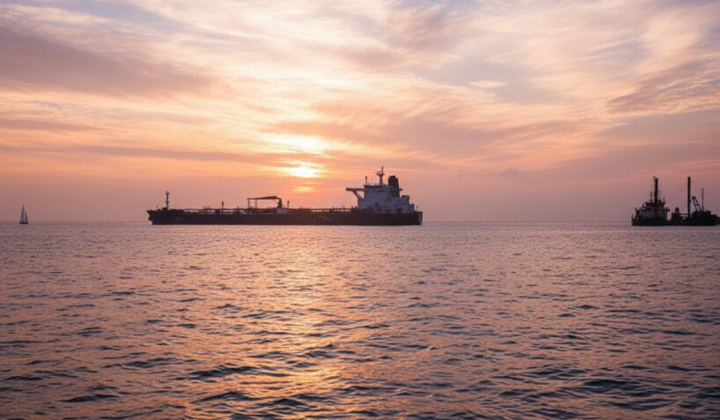
The Strait of Hormuz Blockade's Impact on the Global Economy
According to ХВИЛЯ: An analysis of the blockade's effect on the world economy and oil markets reveals that the most dire predictions did not come true. Middle East expert Mohammad Farajallah notes that while a barrel of oil was expected to reach $150, prices stabilized at an acceptable level. The actual price per barrel peaked at $116, demonstrating the market's ability to adapt to new conditions.
The Strait of Hormuz is one of the world's most critical maritime trade routes, with a daily capacity of 30 million barrels. However, the oil market has shown resilience in the face of the blockade by utilizing alternative supply routes. Shipments from Saudi Arabia, Algeria, Venezuela, and other Arab nations have helped avert a total shortage.
As Farajallah points out: 'There are some alternatives, not many, but they exist.'
Contemporary Challenges and Market Adaptation
The expert also emphasizes that the current crisis has driven up oil costs and created challenges, but has not become a fatal threat to the global economy. 'This means the fighting can continue, however unpleasant that may sound,' he remarks.
According to Farajallah, the current market situation is substantially different from the period of the Yom Kippur War, when Arab countries completely halted oil supplies to the West. 'Today, the market's flexibility gives Trump room to maneuver, while Iran lacks that time,' the expert underscores.
For context, Saudi Arabia's pipeline can transport one million barrels per day, though this is thirty times less than the Strait's capacity. 'This at least allows the economy to breathe,' adds Farajallah, highlighting the importance of alternative oil sources.
Consequently, the situation on the global oil market remains under control despite the persistent challenges.
The blockade of the Strait of Hormuz and its consequences for the oil market illustrate the critical importance of having backup supply routes during crises. This helps avoid sharp price fluctuations and ensures stability in the world market. The market's flexibility in responding to supply changes is a key factor influencing the global economy, showing that nations can adapt even to the most difficult challenges. The strategic importance of the Strait, through which about one-third of the world's seaborne oil passes, makes such adaptability essential for energy security.
As the situation in the Strait of Hormuz continues to evolve, the repercussions for oil prices are significant. The recent surge to $120 prompted an emergency OPEC+ meeting, highlighting the delicate balance in the oil market. Understanding these developments is crucial for grasping the broader implications on global supply and economic stability.

Read also