Ancient Creature Always Bent to the Right, New Study Reveals

Unearthing the Secrets of Spriggina floundersi
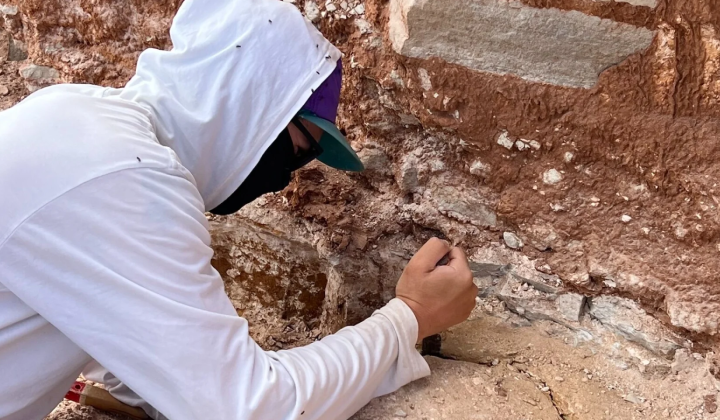
According to НВ — Техно: On July 9th at 19:30, a collaborative study by paleontologists from the American Museum of Natural History, Harvard University, and other U.S. institutions revealed that the ancient organism Spriggina floundersi, which lived approximately 550 million years ago, consistently showed a preference for bending its body to the right. The findings, based on research conducted in the Flinders Ranges and adjacent areas of South Australia, were published in the journal Scientific Reports.
Scientists analyzed over 100 exceptionally well-preserved fossils of Spriggina floundersi. These imprints were discovered in the Flinders Ranges, a critical site for studying the Ediacaran Period, which spanned roughly 635 to 538 million years ago. The results showed that the number of specimens curved to the left in the rock was double that of those curved to the right. This discovery suggests that the living organism may have had a natural tendency to bend to the right, a key aspect of its morphology.
Evolutionary Shifts and Research Significance
Spriggina is one of the earliest known creatures with bilateral body symmetry. Lead author Scott Evans noted:
'In modern animals, similar traits are closely linked to complex sensory abilities.'
This points to evolutionary changes occurring in organisms during the early stages of life on Earth.
The study of Spriggina floundersi not only adds new insights into the evolution of bilateral symmetry but also highlights the importance of fossils as a source of information about ancient life. Examining such creatures helps scientists better understand how life developed on our planet.
This discovery holds significance not just for paleontology, but also for understanding the evolutionary processes that shaped modern biology. Grasping the morphological features of ancient organisms like Spriggina floundersi can shed light on how early life forms adapted to their environment.
Research into these fossils opens new horizons for studying Earth's evolutionary history and may aid in further investigations of biological diversity.
In addition to the fascinating findings about the remarkable preservation of soft tissues in a fossil pterosaur, this research on Spriggina floundersi underscores the complexity of evolutionary developments during the Ediacaran Period. Both discoveries highlight the significant role fossils play in unraveling the intricate history of life on Earth.

Read also