Singaporean Stalinism: The Temptation of an Effective State
Supporters of the old liberal order will see in this formula a dangerous game with words. Its authors, on the contrary, consider it a response to the crisis of Western democracies, the degradation of classical dictatorships, and an increasingly acute shortage of competent governance.
A specter is haunting the world - the specter of a state that promises order without the chaos of democracy and development without the corruption of authoritarianism.
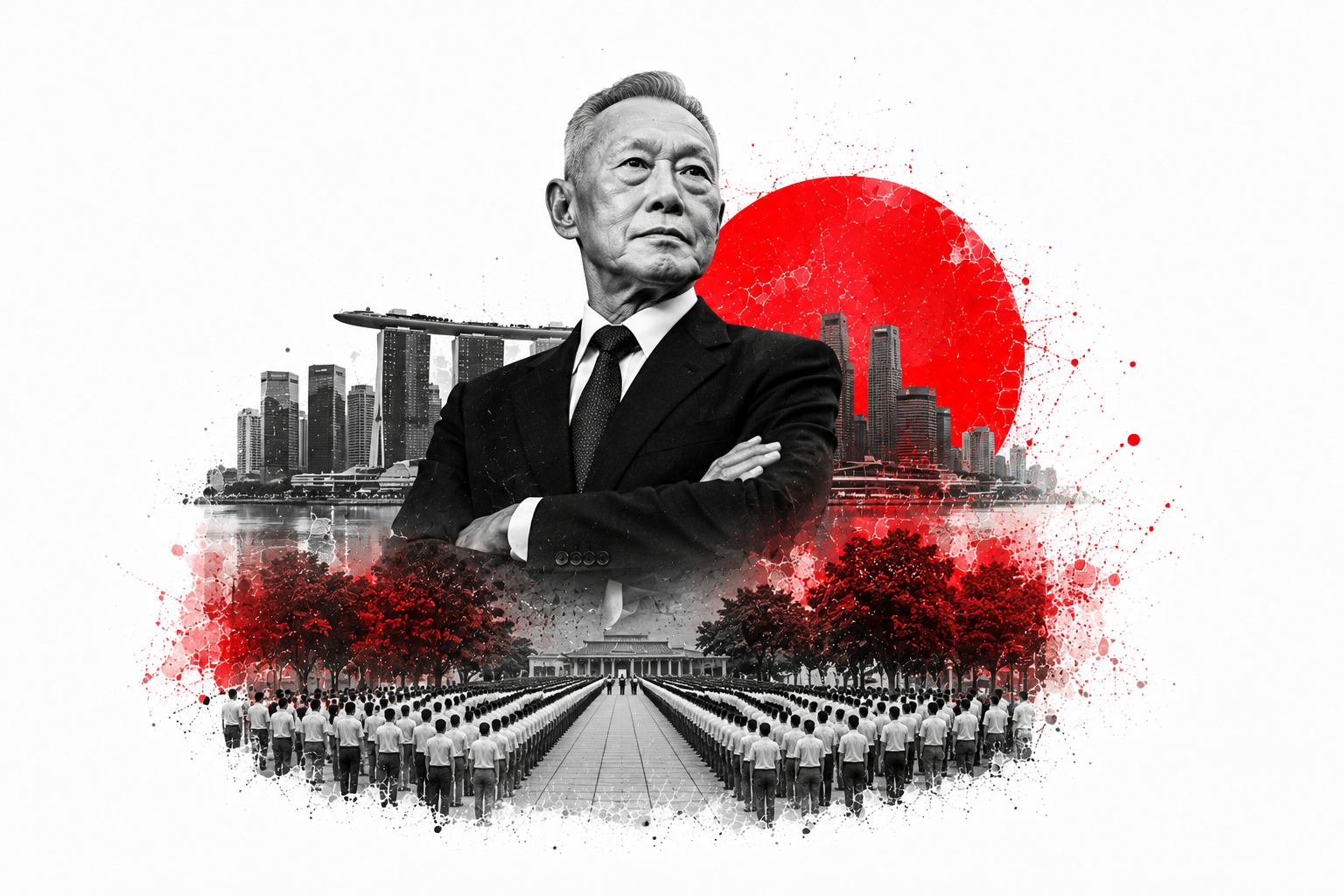
The concept of 'Singaporean Stalinism' claims to be a political synthesis: the economic pragmatism of Lee Kuan Yew, combined with centralized strategic planning, strict discipline, and personal responsibility of the political elite.
The End of the Comfortable World
The post-war international system increasingly fails to correspond to reality. The institutions created after World War II formally continue to exist, but their ability to influence major conflicts, trade wars, and debt crises is noticeably weakening.
The UN is increasingly taking on the role of a discussion club. The World Trade Organization cannot stop the return of protectionism. International financial structures offer standard recipes to countries whose problems have long ceased to be standard.
Western democracy is also experiencing a crisis of planning horizon. Electoral cycles encourage governments to postpone unpopular decisions, while social media turn complex politics into competitions of emotional slogans.
Public debt is rising, infrastructure is aging, and reforms are delayed as their costs arise today, while benefits may only appear decades later.
However, traditional authoritarianism does not offer a convincing alternative. It often breeds corruption, clannishness, intellectual degradation, and fear of bad news. A system in which subordinates fear to tell the leader the truth may appear stable - until the moment of sudden collapse.
Politics Without New Ideas
Modern political discourse increasingly revolves around old answers to new problems.
The right proposes borders, tariffs, and a return to national self-sufficiency. The left insists on expanding social programs, climate modernization, and income redistribution. Both sides rarely explain who exactly will pay for these projects in the context of an aging population, expensive debt, and a weakened industrial base.
It is precisely in this vacuum that the demand arises for a state that promises to be both tough, competent, and long-term oriented.
Its supporters want not more democracy or authoritarianism, but more manageability.
The Formula for a New Synthesis
The name 'Singaporean Stalinism' is deliberately provocative. It does not imply a return to mass repression, camps, or the absurdities of centralized planning. It is an attempt to combine individual traits of two very different systems.
From Singapore, this model borrows:
- meritocratic selection of personnel;
- a cult of professional competence;
- predictable rules for business;
- strict anti-corruption measures;
- economic pragmatism instead of ideological dogmas;
- planning of infrastructure and education for decades ahead.
From the Stalinist model, its supporters seek to take:
- centralized determination of strategic goals;
- the ability to concentrate resources on large projects;
- long-term planning;
- discipline of execution;
- subordination of departmental interests to national tasks.
In theory, the result should be a state resembling a technological corporation: with clear goals, measurable indicators, and personal responsibility of leaders.
Dictatorship of Competence
The main promise of this concept is to replace political loyalty with professional fitness.
Positions should be held not by representatives of the right groups or parties, but by people capable of delivering results. Origins, personal connections, and ideological quotas should give way to intellect, discipline, and utility for the state.
Corruption in such a system is treated not as a side effect of politics, but as a threat to national security. High officials must be held accountable for failures not through symbolic resignations, but through real legal consequences.
At the same time, capital receives protection only as long as it creates production, technologies, and jobs within the country. Businesses that merely extract profits or privatize state resources cease to be considered socially useful.
A Dangerous Contradiction
However, this model has a fundamental problem: who will control the controllers?
Singaporean efficiency arose not only due to strict authority. It was supported by strong institutions, a quality civil service, independent judicial mechanisms, international trade, and a relatively small scale of the city-state.
Attempting to transfer this model to a large country without a system of checks and balances may yield a completely different result. Instead of meritocracy, a closed nomenclature may arise. Instead of strategic planning - voluntarism. Instead of fighting corruption - selective punishment of opponents.
Effective authoritarianism always looks appealing in theory, as it presupposes a wise and competent ruler. And it answers the question of what will happen when his successor proves incompetent much less satisfactorily.
The State as a Hypercorporation
'Singaporean Stalinism' is less of a ready-made political system and more a symptom of the times.
It reflects the fatigue from governments that promise much but are unable to build power plants, reform education, or complete infrastructure projects. This is a demand for a state that plans for decades, punishes failures, and rewards competence.
However, transforming the country into a hypercorporation has its price. Citizens are not employees who can be evaluated solely on efficiency indicators. And society is not a balance sheet.
The new model may become a tool for modernization only if a strong state does not destroy the law, and strategic planning does not turn into unlimited power.
Otherwise, the dictatorship of common sense will very quickly become an ordinary dictatorship.

Read also