Moon soil gets its first scientific classification, revealing seven buried layers

Planetary pedology: a new scientific field
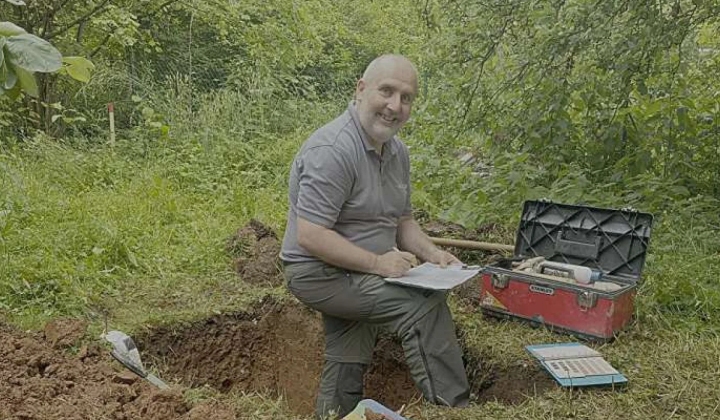
According to НВ — Техно: Researchers have unveiled the first classification system for lunar soils, marking the birth of a discipline they call planetary pedology-soil science beyond Earth. The work appeared in the Soil Science Society of America Journal on August 4 at 23:00. Led by Jérôme Juilleret of the Luxembourg Institute of Science and Technology, the team adapted terrestrial soil-science principles to the Moon's conditions. They also tested the new taxonomic framework on samples returned by the Apollo 15 astronauts in 1971.
Why this matters and what was discovered
The research aims to identify the best lunar locations for habitats, resource extraction, and plant cultivation. For more than a century, Earth-based pedology has classified and mapped soils, but no comparable system existed for the Moon until now. The authors describe how lunar soils form and show how known soil processes can be applied to these unfamiliar settings.
Analyzing the Apollo 15 core sample, they found seven ancient buried layers, indicating that lunar soil is a complex product of physical and chemical changes over billions of years. Earlier, lunar soil was often dismissed as merely stone dust because it lacks biological activity; the new findings suggest a much richer structure. The proposed method was validated on that core, which had been brought back to Earth by Apollo 15.
This new soil classification could broaden the possibilities for exploring and developing our satellite. Establishing planetary pedology may also be an important step for future Moon missions and the settlement of other worlds. A deeper understanding of lunar soils could support technologies for using local resources-essential for sustainable space exploration-and inspire new approaches to farming under low gravity and extreme conditions.

Read also