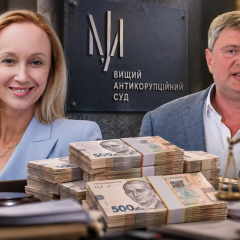
Dnipro lawmakers stall security bills and face corruption allegations

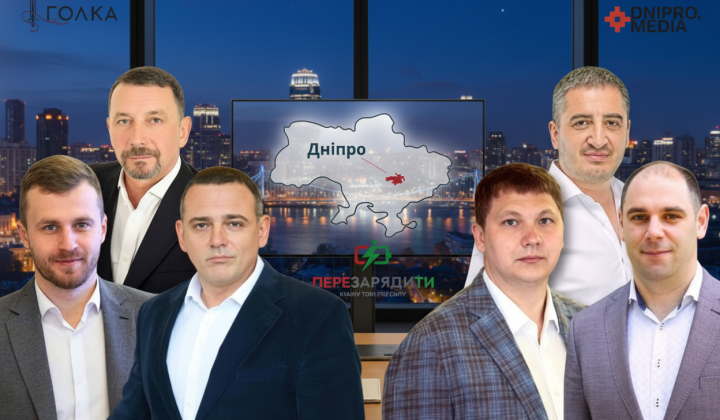
How Dnipro’s MPs are performing in Ukraine’s parliament
According to Главком: An examination of the work done by Ukrainian lawmakers representing the city of Dnipro and the Dnipropetrovsk region in the ninth convocation of the Verkhovna Rada has uncovered instances where they blocked national security legislation and voted for bills containing corruption risks. These MPs have ties to pro-Russian narratives and are currently under investigation by the National Anti-Corruption Bureau of Ukraine (NABU).
Five members of parliament represent Dnipro in the current session: Maksym Buzhansky, Dmytro Kysylevsky, Yuriy Misyagin, Kyryll Nesterenko, and Vyacheslav Medyanyk. All five were elected under the banner of the 'Servant of the People' party. Yuriy Kisiel, who was born in the Dnipropetrovsk region, leads the party’s local branch and oversaw regional elections in 2020. At the start of the convocation, media reports linked Buzhansky, Nesterenko, Medyanyk, and Misyagin to the group associated with oligarch Ihor Kolomoisky.
Voting patterns on key legislation
A critical area of focus is how these deputies vote on national security matters. Maksym Buzhansky signed an appeal to the Venice Commission regarding a bill to ban the Russian Orthodox Church. However, when the vote on that bill took place, Buzhansky did not cast a vote, while Nesterenko and Medyanyk abstained by removing their voting cards. Regarding the decommunization law, which establishes legal grounds for condemning Russian imperial policies, it was supported by Kisiel, Kysylevsky, Misyagin, and Medyanyk. Nesterenko did not vote, and Buzhansky voted against amendments, then removed his card during the final vote on the bill.
In 2024, parliament considered resolution No. 11188 to rename 333 geographic locations. During this process, Buzhansky and Kysylevsky did not vote, while Misyagin, Medyanyk, Nesterenko, and Kisiel removed their cards. The resolution fell 20 votes short of passage. In 2023, the Verkhovna Rada designated May 8 as a Day of Remembrance and Reconciliation. Nesterenko removed his card, Kisiel did not vote, and Buzhansky was the sole deputy to vote 'against.'
On anti-corruption efforts, Maksym Buzhansky introduced most of the controversial amendments to a bill aimed at eliminating the independence of NABU and the Specialized Anti-Corruption Prosecutor's Office (SAPO). All majority lawmakers from Dnipro, along with Kisiel, voted to strip NABU and SAPO of their independence. Kisiel’s name also appeared in the NABU and SAPO operation 'Midas,' which investigated corruption in the energy sector. NABU served Kisiel with a notice of suspicion for allegedly receiving an improper benefit in exchange for a vote in parliament. SAPO launched an investigation into Medyanyk based on communications about resolving a business issue with a deputy prosecutor.
Dmytro Kysylevsky introduced bill No. 9627, which would allow changes to land-use designations without community approval. This bill was supported by Kysylevsky, Medyanyk, Misyagin, and Kisiel. Notably, the law would remain in effect for five years after the war ends.
Tensions are rising in the Verkhovna Rada over the conduct of Dnipro’s deputies, who not only block important legislation but are also linked to corruption schemes. For instance, Buzhansky stated:
'You cannot... tear down Soviet symbols from mass graves.'
He also remarked:
'I voted red on moving Victory Day from May 9 to May 8. Without me.'
These comments have raised public concern about the lawmakers' stances on national security and historical memory.
Given the facts above, the actions of Dnipro’s MPs raise serious questions about their political accountability and their impact on Ukraine’s national security. Blocking vital bills and connections to corruption schemes could have negative consequences for the region and the country as a whole. The public expects greater transparency and responsibility from its leaders, especially during wartime and amid threats to national security.
As the situation unfolds in Dnipro, it is essential to examine how local lawmakers' voting behaviors and connections to influential figures may mirror similar patterns observed in other regions. For instance, the recent analysis of Poltava lawmakers and their associations with the Kolomoisky group reveals troubling ties and voting trends that could shed light on broader issues affecting governance and accountability in Ukraine's parliament.

Read also