Family Contracts, Voting Patterns, and Business Ties: Poltava Lawmakers and Their Links to the Kolomoisky Group

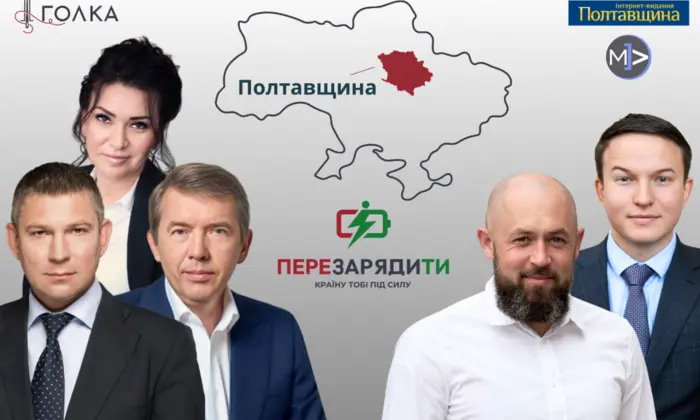
Political Connections of Poltava Region Deputies
According to Главком: An examination of political ties between deputies from the Poltava region and the Kolomoisky group reveals their active voting on key legislation related to national security, corruption, environmental protection, and European integration. Among those associated with this group, Yuriy Shapovalov stands out-he served as one of four regional coordinators during the 2019 elections, overseeing Poltava Oblast. Running as a self-nominated candidate, Shapovalov won his district and later joined the parliamentary group 'For the Future'.
Deputies from the 'Servant of the People' Faction
The 'Servant of the People' faction also includes the following deputies:
- Maksym Berezin
- Oleksiy Movchan
- Andriy Boblyakh
- Kostyantyn Kasai
- Anastasiya Lyashenko
Notably, in 2021, Lyashenko, Movchan, and Boblyakh joined the 'Dubyna' parliamentary association, founded by Oleksandr Dubinsky, who was expelled from the 'Servant of the People' faction and later charged with high treason. In 2022, Poltava faced the risk of a military administration being established after Mayor Oleksandr Mamai was suspected of disclosing information about the locations of Ukrainian Armed Forces. In response, 'Servant of the People' members formed a city party branch, led by single-mandate deputy Dmytro Nalotov.
Voting on the recognition of the Revolution of Dignity exposed divisions among Poltava deputies: all except Yuriy Shapovalov supported the resolution, while Kasai was absent during the vote. Regarding family connections, Shapovalov's wife ran a cinema café called Sweetlo, which screened films with Russian dubbing in late 2022-a move condemned by the head of the Poltava Regional State Administration, and the language ombudsman Taras Kremin pledged to monitor the establishment.
During the vote on the decommunization law, Shapovalov's voting card was inserted but he did not cast a vote. Deputies Kulinich, Berezin, Boblyakh, Kasai, and Shapovalov supported the abolition of the independence of the National Anti-Corruption Bureau and the Specialized Anti-Corruption Prosecutor's Office, while Nalotov did not vote on this issue. Movchan and Lyashenko were absent during voting on these critical bills. On the vote for the Ihor Mazepa law, Shapovalov and other deputies were active, while Kulinich abstained.
Shapovalov also voted in favor of Bill 5655, but during the vote on the 'Reduction of Industrial Emissions' bill, he withdrew his voting card. Shapovalov's sister, Iryna Movchan, is the founder of several companies that receive public procurement contracts, including Apilak, which leased land in a water protection zone where a cottage was built-officially registered as a recreation base. Shapovalov's declaration states that he rents a two-story house from his sister's company.
The deputy's daughter, Milana, founded the company Ahroteplo, which also receives municipal contracts. During the vote on the 'Emerald Network' bill, Shapovalov abstained, and Movchan did not vote. Deputies Ustenko and Kasai co-authored Bill 9516, aimed at easing forest logging regulations, but the bill failed to secure enough votes.
It is important to note that the behavior of Poltava politicians and their voting records on key legislation point to complex political connections and influences that warrant further analysis and public scrutiny.
This analysis indicates the presence of Kolomoisky group influence over Poltava deputies, which may signal potential conflicts of interest and a lack of transparency in their political activities. As the country faces challenges related to national security and corruption, it is crucial for the public to remain vigilant and demand accountability from their representatives. This could serve as a foundation for strengthening democratic institutions and enhancing trust in Ukraine's political system.
In addition to the political dynamics observed in Poltava, a similar analysis of Zaporizhzhia's MPs reveals their voting behavior on crucial issues like national security and decolonization. Understanding these patterns across regions can shed light on the broader political landscape and the interconnectedness of local representatives in Ukraine.

Read also