Fourth Drone Strike Hits Tuapse Oil Terminal: Blaze Engulfs 40,000 Cubic Meters of Crude

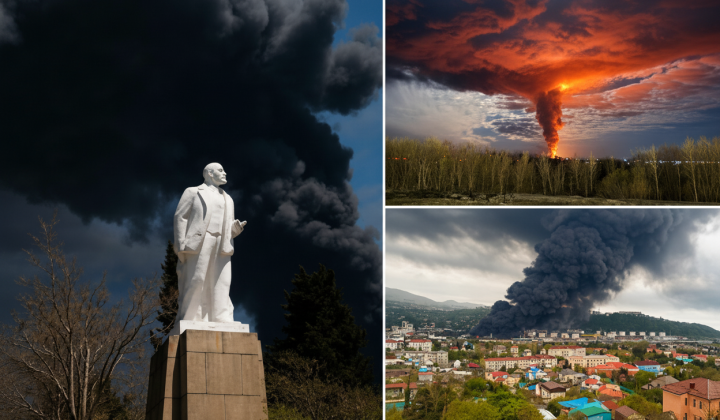
Strikes on Oil Infrastructure in Tuapse
According to ХВИЛЯ: In the early hours of May 1, 2024, Ukrainian drones struck the oil terminal in Tuapse, Krasnodar Krai, marking the fourth such attack in two weeks. A fresh fire erupted at the maritime terminal, with flames sweeping across a section containing four storage tanks, each holding 10,000 cubic meters of oil-at least two of which are burning. Analysts from 'CyberBorshch' conducted geolocation of fire footage and satellite imagery from April 28. The attack destroyed a pumping station within the facility, and the area is now contaminated by oil from a previously destroyed 20,000-cubic-meter reservoir. The total fire zone may encompass up to 40,000 cubic meters of oil, while an additional 30,000 to 60,000 cubic meters in adjacent tanks remain at risk.
Currently, 790 personnel and 48 pieces of equipment are deployed at the Tuapse site. Authorities have collected and removed 13,333 cubic meters of fuel oil, as well as stone-oil and water-oil mixtures. Eighty-five evacuated residents are still housed in local hotels. During the attack, central Tuapse experienced a loss of communication and electricity. This is the fourth strike on Tuapse’s oil infrastructure in two weeks, following previous attacks on April 16, 20, and 28. Over the past 16 days, fires have been recorded at oil facilities on 14 of them, and oil slicks have appeared on Tuapse’s beaches. On April 20, Russia’s consumer watchdog recommended that local residents avoid unnecessary outings.
Strikes on Oil Infrastructure in Perm Krai
Additionally, Ukraine’s Armed Forces have targeted oil infrastructure in Perm Krai, located over 1,500 kilometers from the Ukrainian border, for two consecutive nights. On the night of April 29, drones from the SBU’s 'Alpha' special operations center struck the 'Perm' station operated by Transneft. The following night, they hit the same station again and also attacked the 'Lukoil-Permnefteorgsintez' refinery, which has an annual capacity of approximately 13 million tons of oil. At the refinery, the AVT-4 primary oil processing unit-the largest of four such units and responsible for 38% of the plant’s capacity-caught fire. The incident at AVT-4 forced the shutdown of reforming and diesel hydrotreating units.
According to Ukraine’s Ministry of Defense, in April, Ukrainian forces carried out over 160 precision strikes at ranges of up to 120-150 kilometers. Key target areas included:
- Crimea
- Belgorod Oblast
- Voronezh Oblast
- Kursk Oblast
- Rostov Oblast
- Bryansk Oblast
- Donetsk Oblast
- Zaporizhzhia Oblast
Among the targets hit were 25 air defense and radar systems, over 65 storage depots, and 17 command centers. Ukraine’s Ministry of Defense summarized the campaign, stating:
“We strike resources, disrupt supplies, reduce the intensity of shelling and troop mobility. The April strikes are part of a systematic campaign to exhaust Russia.”
On May 1, Perm canceled all outdoor events and a planned fireworks display. Governor Dmitry Makhonin confirmed an attack on 'one of the industrial sites' and banned the publication of photos and videos. Russian Major General Vladimir Popov speculated that the drones may have been launched from within Russian territory. Russia’s Ministry of Defense reported intercepting 141 Ukrainian UAVs over Kuban, Crimea, and eight other regions within a single day.
These developments highlight an escalation in the conflict between Ukraine and Russia, particularly regarding strikes on oil infrastructure, which could have serious economic repercussions for both sides. By targeting strategic assets like oil terminals, Ukraine appears to be aiming to diminish Russia’s resource capacity, signaling a continuation of military operations aimed at depleting the opponent’s resources. As stated by Ukraine’s Ministry of Defense, these strikes are part of a systematic campaign to disrupt supply chains and reduce the mobility of Russian forces.
The ongoing drone strikes have not been limited to Tuapse; similar operations have targeted oil facilities far from the front lines. For instance, Ukrainian drones recently attacked the Orsk oil refinery, located 1,400 kilometers away, highlighting the expanding scope of these military actions. To understand the broader implications of these strikes on Russia's oil infrastructure, read more about the situation in Orsk here.

Read also