Russia's Economy to Slow to 0.4% in 2026

Russia's Economic Outlook for 2026
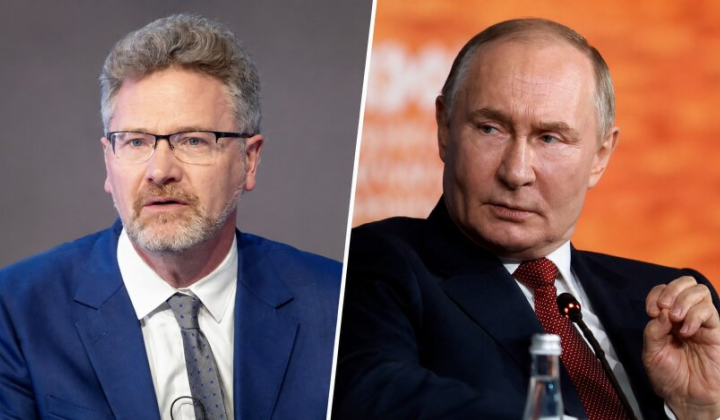
According to ХВИЛЯ: British economic historian Adam Tooze has analyzed Russia's economy in 2026, predicting growth of just 0.4%. He notes that while the slowdown does not amount to a collapse, the economy is no longer expanding at the pace seen early in the war. Tooze argues that the conflict will not end due to economic pressures on Russia, but rather because of Ukraine's exhaustion.
According to Tooze, the Russian economy grew at an annual rate of 4% in 2023-2024, but contracted in the first quarter of 2026. Russia's projected growth rate for 2026 matches that of Germany. The Russian central bank has maintained its key interest rate at 14.5%, and the budget deficit for the first four months of 2026 stands at 2.5% of GDP. Unemployment in Russia has fallen to 2.3%, yet 73% of businesses report labor shortages. Estimates indicate a shortfall of 2.3 million workers: 800,000 in industry and 1.5 million in services and construction.
Migration Effects and Economic Forecasts
Around 650,000 people left Russia in 2022, likely impacting the labor market. Meanwhile, 65,000 Indian workers are employed in Russia, earning between $600 and $700 per month. Russia's gross domestic product stands at $3 trillion. The Kremlin had forecast growth rates above the global average of 3.1% for 2026. Despite this, President Putin summoned top economic officials to address the sluggish growth.
Adam Tooze states: 'This is not an economy that is collapsing, but it is an economy that is no longer growing at the rate it was at the beginning of the war.'
Tooze adds that 'an economy is forming around Russia that is disconnected from global flows. But an economy with a GDP of $3 trillion and a relatively high standard of living remains attractive to labor migrants from neighboring countries.' He emphasizes that 'Russia is not fighting for economic reasons, and the war will not end for economic reasons. Rather, it will end for economic reasons on the Ukrainian side-because Ukraine is exhausted.'
In summary, Russia's economic situation in 2026 is challenging, marked by slowing growth, labor shortages, and other hurdles that could shape the country's future development. Amid growing economic isolation and a lack of personnel, Russian enterprises may face new difficulties, potentially leading to further deceleration of economic expansion.
As Russia's economy grapples with a projected growth rate of just 0.4% in 2026, the ramifications of declining business profits are becoming increasingly evident. The recent sharp drop in Russian incomes highlights the challenges faced by citizens as economic stagnation sets in. This situation underscores the complex interplay between economic indicators and the everyday realities for the population.

Read also