Former NATO Military Committee Chair Admits Alliance Lacks a Victory Strategy for Ukraine

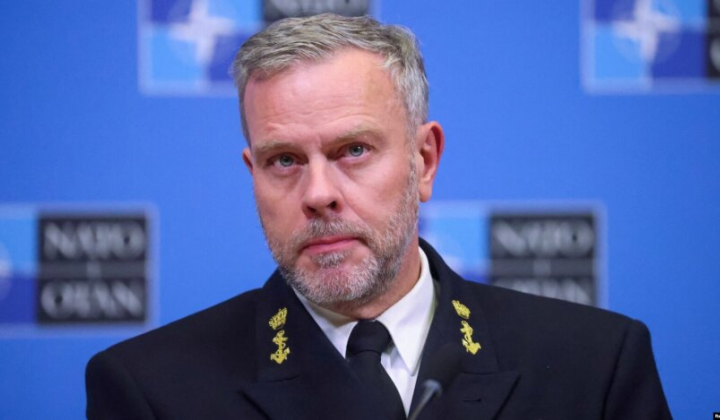
NATO Acknowledges No Clear Path to Victory for Ukraine
According to ХВИЛЯ: Admiral Rob Bauer, who previously led NATO's Military Committee, has conceded that the alliance has no defined strategy for Ukraine to win its war against Russia. Speaking at the GLOBSEC forum in Prague in an interview with Euromaidan Press, he stated that NATO never framed its actions as aiming for a Ukrainian victory. Bauer emphasized that if Kyiv had received Western weaponry in the summer of 2022, it could have ended the conflict in Ukraine's favor. This admission highlights ongoing debates within the alliance about the scope and goals of its support for Ukraine.
According to Bauer, by late spring and early summer of 2022, Ukrainian forces had managed to reclaim half of the territories initially seized by Russia. However, while discussions over arms deliveries dragged on, the Russian army had time to construct defensive fortifications. In the end, Western allies did supply Ukraine with tanks, HIMARS systems, ATACMS, and F-16 fighter jets, but these arrived later than desired, limiting their potential impact on the battlefield.
Russian Nuclear Threats and NATO's Consensus Problem
Bauer also recalled Russia's nuclear threats in the fall of 2022. According to him, Moscow directly called Paris, London, and Washington with such warnings. In response, Western nations declared that if a nuclear strike occurred, U.S. forces would destroy Russian troops in Ukraine using conventional weapons, a stark deterrent meant to prevent escalation.
The lack of a victory strategy, Bauer explained, stems from NATO's consensus-based decision-making mechanism, where a single member's objection can block any move. He pointed out that developing a coherent strategy is complicated by the positions of the U.S. administration, as well as the governments of Hungary and Slovakia. Bauer argued that Ukraine must be integrated into both the European Union and NATO to avoid the grave mistake of excluding the largest nation with the most recent combat experience against Russia from these structures.
“It was never formulated as 'we are doing this so Ukraine can win the war.' It was also not formulated as 'we are doing this so Russia loses this war.' So the formulation became: 'We will support Ukraine for as long as it takes,'” Bauer said.
Assessing the situation, Bauer warned: “Don't you dare even try. Keep this a conventional war, which is already bad enough, but do not step onto nuclear territory, because you will be punished.”
Admiral Bauer's acknowledgment that NATO lacks a clear victory strategy for Ukraine underscores the complexities of international support for Kyiv amid its conflict with Russia. This reality could shape future decisions by Western allies regarding military aid and policy toward Ukraine. As the war continues, strategic choices must reflect Ukraine's experiences and needs, which could significantly influence the region's trajectory.
As NATO grapples with its strategy for Ukraine, insights from military leaders like General Hodges offer a contrasting perspective, suggesting that Ukraine is poised to emerge as a leading defense power in Europe. This outlook not only reflects optimism about Ukraine's potential but also underscores the varying interpretations of the conflict's trajectory. To explore this optimistic vision for Ukraine's future and its implications for European security, read more about Hodges' predictions on Ukraine's defense capabilities.

Read also