Millions at Risk: How Air Conditioning and Desalination Sustain Life in the Arabian Peninsula

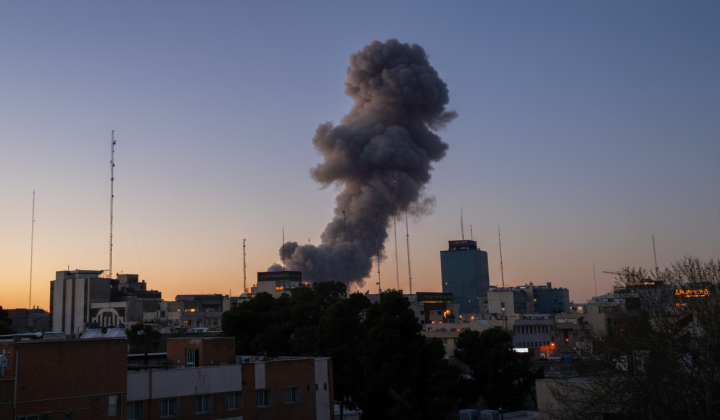
A Looming Threat to the Arabian Peninsula
According to ХВИЛЯ: Analyst Igor Tyshkevich has warned that an escalation of conflict could endanger the lives of tens of millions on the Arabian Peninsula if energy infrastructure is destroyed. He stated that survival in Saudi Arabia, the UAE, and Qatar is critically dependent on air conditioning systems and seawater desalination plants. With summer temperatures in the sun reaching 60-65 degrees Celsius (140-149°F), the consequences of a power failure would be catastrophic. This region's extreme climate makes technological life support systems non-negotiable for modern habitation.
The Critical Role of Energy Infrastructure
Historically, the natural ecosystem of these territories could only sustain a few hundred thousand Bedouins. Today, tens of millions of citizens and migrant workers rely on technology for their very existence in these harsh conditions.
'Let's remember our winter and the attacks on our energy infrastructure. For them, spring is beginning, and with it, attacks on energy.' - Igor Tyshkevich
This highlights how potential power supply issues could threaten the critical systems that sustain life. Tyshkevich also noted that with electricity supply problems, the fundamental questions become: 'How do air conditioners work, simply put? How is water desalinated, simply put?' This underscores the vital importance of stable energy infrastructure for population survival.
Furthermore, the analyst indicated that 'this could very well be the next stage, but here I would set a shorter timeline,' hinting at the possibility of rapid changes in the situation.
He also pointed out that from a climatic and geographic perspective, the situation in Iran might be slightly better. 'There is a calmer region there-that's one thing. Secondly, from a military infrastructure viewpoint, it's not for nothing that Iran has shown all those underground storage facilities. These bases, as a rule, are quite autonomous,' Tyshkevich noted.
In this context, Iran's underground storage facilities and bases could provide it with a certain advantage in the event of an escalating conflict on the Arabian Peninsula.
Thus, the situation on the Arabian Peninsula remains under threat, and understanding the importance of energy infrastructure amid climate change and geopolitical conflicts is becoming increasingly urgent. An escalation of conflict could lead to serious humanitarian consequences, requiring efforts from the international community to prevent disaster.
It is crucial to consider that technological and infrastructural solutions may become critically important for sustaining the population's livelihood in the region.

Read also