European Scientists Unveil Spectrometer That Slashes Research Time Tenfold

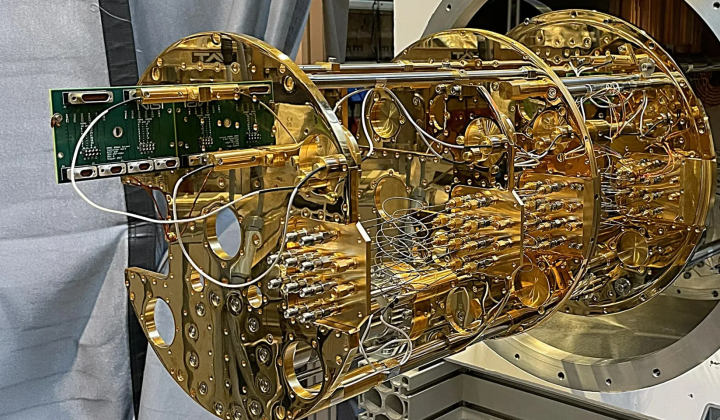
Breakthrough TES-Based Spectrometer: A Game Changer for Nanostructure Analysis
According to НВ — Техно: June 24, 5:00 PM
An international team of researchers has introduced a groundbreaking spectrometer built around a Transition-Edge Sensor (TES) array, marking the first installation of its kind at a European synchrotron facility. This device dramatically outperforms conventional tools by analyzing radiation with far greater efficiency, making nanostructure research significantly easier. Data collection times have dropped from hours to just minutes, unlocking new possibilities for scientific exploration.
The spectrometer is the product of collaboration between Germany's HZB and MPI-CEC institutes, along with the U.S. National Institute of Standards and Technology (NIST). It stands as the only such setup at any European synchrotron complex. Compared to traditional X-ray emission spectroscopy (XES) and resonant inelastic X-ray scattering (RIXS) methods-which require detecting massive photon counts-this new system is 100 to 1,000 times more efficient. Complex measurements that once took hours can now be completed in mere minutes.
Technical Specifications of the TES Spectrometer
At the heart of the spectrometer are 248 specialized micro-sensors, cooled to approximately 25 millikelvins-just a hair above absolute zero (minus 273.125 degrees Celsius). Cooling is achieved using a helium isotope dilution refrigerator, similar to those employed in quantum computers. When a photon from a sample strikes a sensor, it causes an instantaneous microscopic temperature rise that disrupts superconductivity and alters electrical resistance, which is then precisely recorded by a SQUID circuit.
The system is also integrated with an ultra-high-vacuum chamber that maintains precise temperature control for samples, ranging from 10 Kelvin up to room temperature. It is installed on a synchrotron beamline with full polarization control. Originally developed for astrophysics, TES technology was previously limited to just five operational spectrometers worldwide-all in the United States and Japan. The European scientific community has now opened applications for research time, reflecting strong interest in this new capability.
This development opens fresh horizons for research in materials science and physics. Its capabilities are expected to greatly simplify the study of complex nanostructures, potentially leading to breakthroughs in fields from medicine to information technology. Given the success of this international collaboration, similar technologies may emerge in other regions, further boosting the efficiency of modern science.
The introduction of this innovative spectrometer is part of a broader trend in scientific instrumentation aimed at enhancing research efficiency. For instance, a recent development showcases a spectrometer that operates up to 1000 times faster, further revolutionizing how researchers can analyze materials on a nanoscale. This advancement highlights the ongoing evolution of spectroscopic techniques and their critical role in scientific discovery.

Read also