1000x Faster Spectrometer Unveiled by International Research Team

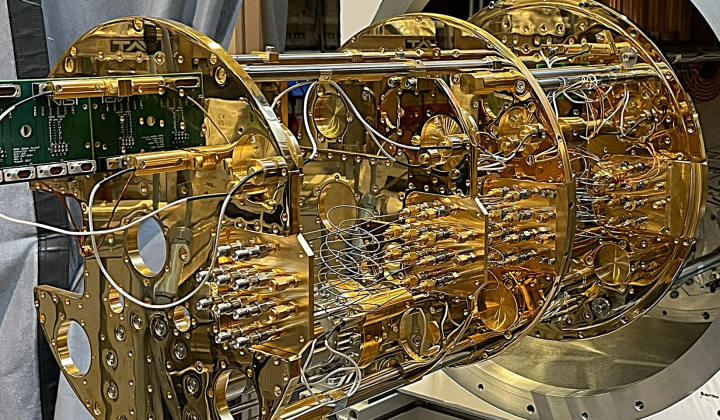
Breakthrough Superconducting Spectrometer
According to НВ — Техно: On June 18 at 21:00, the Helmholtz-Zentrum Berlin (HZB), the Max Planck Institute for Chemical Energy Conversion, and the U.S. National Institute of Standards and Technology (NIST) jointly introduced a new superconducting spectrometer. This system can detect X-ray photons 100 to 1000 times more efficiently than conventional wavelength-dispersive X-ray spectrometers.
The device relies on an array of 248 highly sensitive sensors cooled to just 25 millikelvin (mK) using a helium dilution refrigerator. Changes in the sensors' electrical resistance are monitored by a circuit built around superconducting quantum interference devices (SQUIDs). The setup has been integrated with an ultra-high vacuum camera at the BESSY II UE52-SGM synchrotron beamline, enabling extremely precise measurements.
Key Advantages of the New Instrument
This innovation significantly expands the ability to analyze atomically thin layers and nanostructures, slashing measurement times from hours to just minutes. According to Régis Decker:
“The instrument opens up unprecedented opportunities for molecular chemistry, biology, and quantum materials physics, and it shortens experiment durations: measurements that once took hours can now be completed in minutes.”
The spectrometer can study samples across a temperature range from 10 Kelvin up to room temperature, making it a versatile tool for diverse scientific and industrial research applications.
This new spectrometer has the potential to profoundly impact scientific research, particularly in fields requiring detailed atomic-level material analysis. The dramatic reduction in measurement time could accelerate the development of new technologies and innovative materials, ultimately benefiting industry. Its development also underscores the value of international scientific collaboration, paving the way for fresh discoveries across multiple disciplines.
The advancements in spectroscopic technology are not only pivotal for materials science but also have significant implications for national security. As highlighted in a recent article, innovative spectroscopy methods are set to enhance the effectiveness of US missile defense systems, showcasing the broader applications of cutting-edge research. To explore how these developments intersect, read more about the strengthening of missile defense through new spectroscopy.

Read also