Financial Drip: Why Brussels Refused Kyiv Emergency Funds?

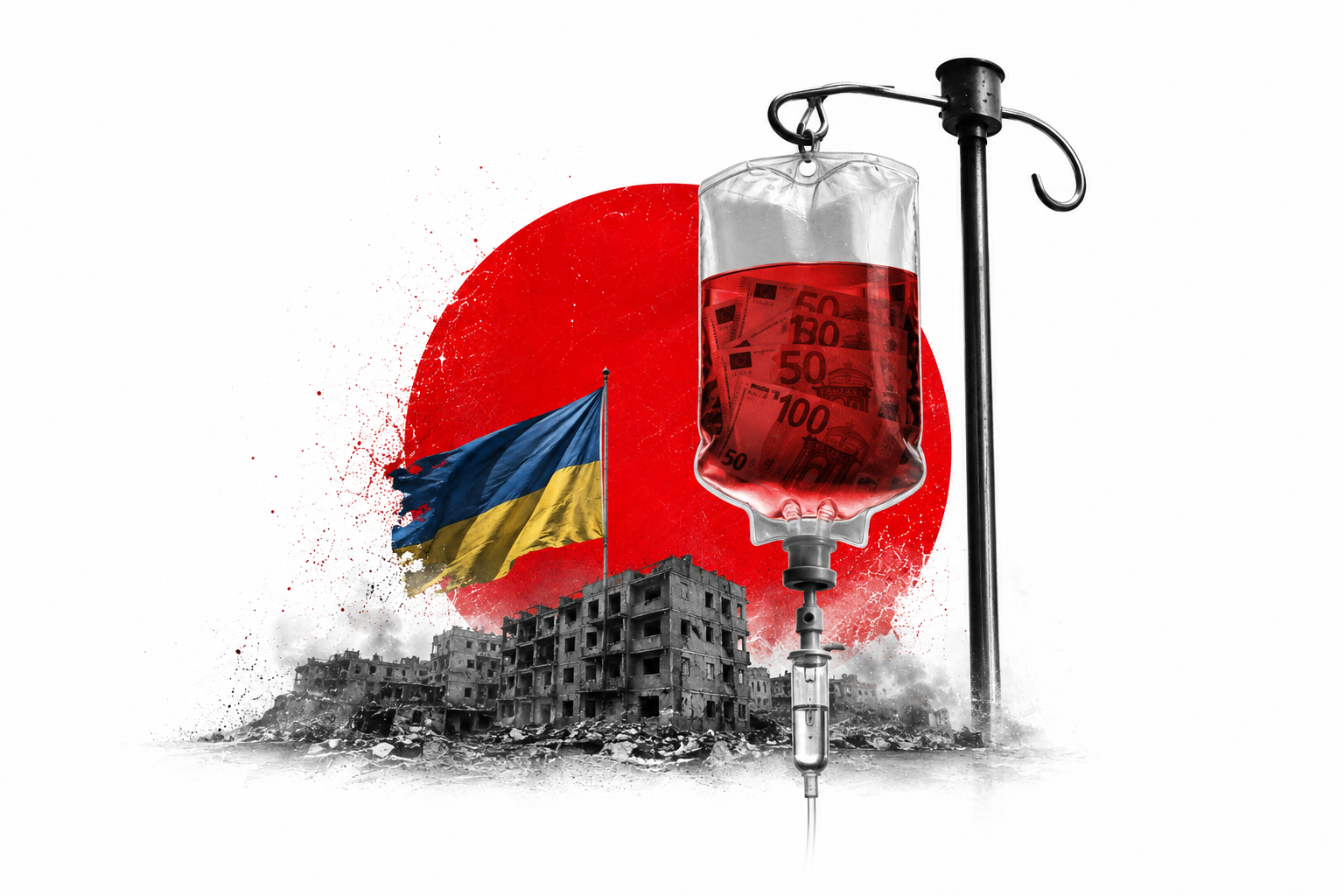
The European Commission has effectively blocked Kyiv's attempt to expedite the disbursement of funds under the €90 billion package. Instead of front-loaded financing, Brussels insists on the original structure: approximately €45 billion in 2026 and 2027.
Ukraine needs money now. Europe offers it on schedule. The dispute over €90 billion highlights a fundamental problem of Western aid: war consumes resources daily, while Brussels finances it with budget years.
The difference is fundamental for the Ukrainian budget.
War does not distribute bills evenly over 24 months. Missiles, drones, munitions, army procurements, and energy repairs must be paid for when they are needed.
European accounting works differently.
And it is the clash of these two calendars that explains much of the current conflict.
Money is available. But not today
The simplest explanation of Brussels' position is also the most crucial: €90 billion is not a suitcase full of cash sitting in the basement of the European Commission.
Financing is linked to budgetary mechanisms, borrowings, guarantees, and political agreements between EU states.
Accelerating payments means more than just changing the date of a bank transfer. Someone will have to raise capital earlier, provide guarantees, and take on additional financial risks.
And European capitals currently have enough of their own accounts.
Defense budgets need to be sharply increased. The military industry needs to expand. Ammunition stocks need to be replenished. Social expenditures have not disappeared. Economic growth remains weak.
Europe can afford to support Ukraine.
The much more complex question is how quickly it is willing to pay for it.
Russian billions that did not become European
For a long time, there was a politically appealing idea in Brussels: a significant portion of the Ukrainian bill would ultimately be paid by Russia itself.
In Europe, huge Russian state assets are frozen, most of which are concentrated in Belgian Euroclear.
On paper, the arrangement looks almost flawless.
European taxpayers do not spend additional tens of billions. Ukraine receives funding. Russia pays for the consequences of the war.
In practice, everything is much more complicated.
Belgium and other cautious participants in the discussion fear lawsuits, financial consequences for Euroclear, risks for the euro, and the precedent of direct confiscation of central bank reserves.
Hence, Europe was able to freeze Russian assets.
Transforming all their capital into a free cash pool for Ukraine is not possible.
This difference is measured in hundreds of billions of euros.
The end of free money
As long as Russian capital remains mostly untouched, the bill returns to where Brussels tried to remove it.
To European budgets.
And there, the situation is becoming increasingly uncomfortable.
Germany must simultaneously modernize the Bundeswehr, finance infrastructure, and support the economy. France is struggling with a large budget deficit. Other states have their own debt limits.
To this must be added the American demand to significantly increase defense and related security spending.
Each additional billion for Ukraine therefore competes not only with hospitals, pensions, or roads.
It increasingly competes with European tanks, missiles, and munitions factories.
This is where the era of the political slogan 'as much as needed' ends and a much less romantic era of budget limits begins.
Financial Leash
However, there is also a political dimension.
Money is one of the most potent tools to influence Kyiv.
As long as the Ukrainian state is critically dependent on external financing, the schedule of tranches automatically becomes part of grand politics.
It is not necessary to assume the existence of a secret conspiracy between Washington and Brussels to see the obvious mechanism.
Those who finance the deficit have leverage.
If a significant portion of multi-year funding is issued to Ukraine in advance, that leverage weakens. If payments remain in regular tranches, each subsequent package preserves the opportunity for political control.
Reforms.
Anti-corruption requirements.
Procurements.
Mobilization policy.
Negotiating position.
All these issues become much more persuasive when the next tranche is not yet in the account.
Autumn Arithmetic
Against this backdrop, the calendar is particularly interesting.
If the American negotiation track really activates in the fall, Ukraine's financial dependency will inevitably become one of the factors determining Kyiv's maneuvering space.
From here arises the temptation to see in the European payment schedule a conscious financial dosage before a future agreement.
There is no evidence of direct coordination in the form of 'less money in exchange for more concessions.'
But the practical effect of dosed financing is similar.
Ukraine receives enough resources for the state to continue functioning.
At the same time, it does not gain the financial autonomy that would allow it to stop considering the position of the main donors for years to come.
This is not necessarily a conspiracy.
This is a structure of dependency.
War 4.0 against Excel
The deepest problem, however, is not even political.
It is bureaucratic.
Modern war has accelerated to a speed for which the European financial system was simply not created.
The Ukrainian army may need hundreds of thousands of FPV drones within a few months. After a series of strikes, interceptors must be urgently procured. A destroyed energy facility needs to be repaired before the next winter, not before the next budget cycle.
The EU, on the other hand, operates through multi-year programs, approval procedures, control of fund usage, and national guarantees.
This is a great system for building highways.
Significantly worse for war.
Russia can decide to increase the production of a certain type of drone and redirect resources within months.
Kyiv must respond just as quickly.
Brussels, meanwhile, has to agree on who, how much, when, and on what legal grounds will pay.
War operates in real time.
Europe - in financial perspectives.
From Unlimited Support to Regulation
That is why the dispute over €90 billion is more important than the specific schedule of tranches.
It shows a change in the very model of support.
The first phase of the war was marked by a sense of emergency. Money was found through emergency mechanisms. Military stocks were opened. Old budget rules were pushed aside.
Now the war has turned into a permanent item of expenditure.
And permanent expenses sooner or later begin to be regulated.
Europe does not refuse to finance Ukraine. On the contrary, €90 billion shows a willingness to continue this for years.
But there is a huge difference between the promise of €90 billion and the ability to receive €90 billion tomorrow.
This is where the Ukrainian budget now lives.
Kyiv enters the next phase of the war with a paradoxical guarantee: money will be available.
Just not necessarily when it is most needed.

Read also