Physicists Challenge Hall Effect Limits and Develop a Versatile Magnetic Sensor


Revolutionizing Classical Magnetism
According to НВ — Техно: A groundbreaking experiment conducted at Carnegie Mellon University in the United States has overturned long-held beliefs about magnetism. The research team, led by Associate Professor Simranjit Singh, demonstrated that the Hall effect can occur even when the magnetic field is aligned parallel to the material’s plane. Previously, it was widely accepted that the Hall effect only arises when the magnetic field is perpendicular to the direction of electric current. This discovery overturns that fundamental limitation.
Innovative Microscopic Sensor Design
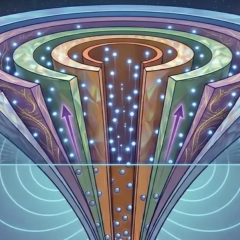
To explore this phenomenon, the scientists engineered an ultra-thin sensor composed of a crystal made from tantalum iridium telluride combined with a magnetic layer of Cr2Ge2Te6. Measuring just a few atoms thick, this sensor captured the anomalous Hall effect within the plane of the material. The key to this breakthrough was the spin-orbit interaction occurring at the boundary between the materials, which enabled detection of this previously unobserved behavior.
This advancement holds significant promise for simplifying electronic systems. A single atomic-scale chip can now detect magnetic fields across multiple axes simultaneously, eliminating the need for multiple individual sensors. Such technology could transform the design of electronic devices by reducing complexity while improving performance and efficiency.
Beyond practical applications, the experiment opens up new avenues in material science and electronics research. By redefining fundamental concepts of magnetism, it sets the stage for further exploration in solid-state physics. These insights could spur innovations across diverse fields including information technology and energy, signaling a new era of technological development.
This groundbreaking research not only challenges existing notions of magnetism but also resonates with other recent findings in the field. For instance, hidden shifts in magnetic properties within atomic nuclei have been identified as crucial to understanding complex gamma radiation phenomena. Such interconnected discoveries could pave the way for further advancements in both material science and quantum physics.

Read also