Gallium Defies Physics as Its Bonds Re-form After Melting

New Discoveries in Gallium Research
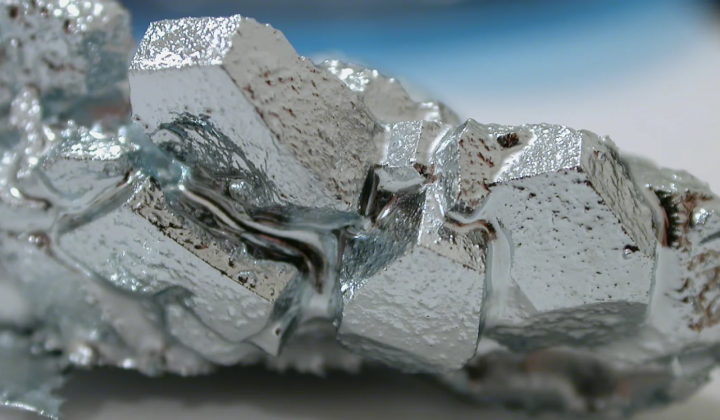
According to НВ — Техно: A study led by Professor Nicola Gaston of the University of Auckland and the MacDiarmid Institute, with analysis by Dr. Stef Lambie, upends conventional understanding of gallium. Published in the journal Materials Horizons on July 9 at 4:30 PM, the findings show that covalent bonds in gallium-which break when the metal melts-can actually re-form as the liquid metal is heated further.
Properties and Applications of Gallium
Gallium was first discovered in 1875 by French chemist Paul-Émile Lecoq de Boisbaudran. This metal stands out for its unusually low melting point and its tendency to form linked pairs called dimers. Notably, solid gallium is less dense than its liquid form. It is also known for forming covalent bonds through electron sharing, a key aspect of its chemical behavior.
- Gallium is widely used in semiconductors, LEDs, solar panels, and the aerospace industry.
- Researchers are exploring gallium's potential to detect chemical traces of ancient microbial life on Mars.
These new insights could dramatically reshape our understanding of the metal's properties and its potential uses across various scientific and technological fields.
This research may open new frontiers for gallium in modern technologies, particularly in the semiconductor industry and energy solutions.
The re-formation of covalent bonds could also be significant for developing advanced materials with improved characteristics, ultimately boosting the efficiency of various devices and instruments. Given that gallium is already employed in aerospace technology and planetary exploration, these results could serve as a foundation for further scientific investigation in those areas.

Read also