Ukrainian Intelligence Exposes Supply Chain for Russian Su-57 Stealth Fighter

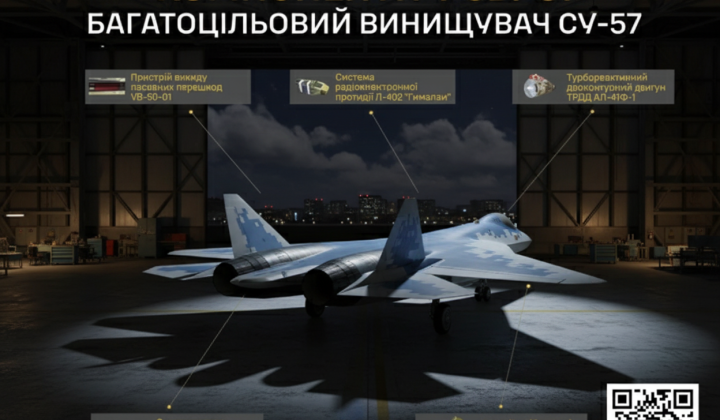
Companies Involved in Manufacturing Russia's Su-57 Fighter Jet
According to Главком: Ukraine's Main Directorate of Intelligence (GUR) has disclosed a list of companies involved in the production of Russia's Su-57 stealth fighter, along with foreign-made technological equipment utilized by the Russian military-industrial complex. The intelligence report identifies over one hundred enterprises participating in this supply chain. The Su-57 is Russia's most advanced combat aircraft, and its production relies on a complex international network.
Notably, one-third of the identified companies are not currently subject to sanctions from any coalition country. Key entities named in the report include:
- Saint Petersburg's 'Krasny Oktyabr' JSC – a manufacturer of auxiliary power units for the Su-57;
- The National Institute of Aviation Technologies – responsible for developing the aircraft's cockpit canopy design;
- The Institute of Theoretical and Applied Electrodynamics of the Russian Academy of Sciences – tasked with developing and applying radar-absorbent coatings;
- 'YASHV Avia' LLC – a producer of aviation tires for the fighter.
Foreign Technology and Sanctions Enforcement
The GUR also published data on 66 units of foreign technological equipment being used by Russian defense enterprises. This list includes:
- Lathes, milling, and grinding machines;
- Computer numerical control (CNC) machining centers;
- Equipment for manufacturing printed circuit boards;
- Vibration test stands and thermal chambers.
The manufacturers of this equipment are based in Germany, Japan, Taiwan, Austria, Switzerland, and other nations.
In response to this intelligence, Ukrainian President Volodymyr Zelenskyy enacted decrees implementing a decision by the National Security and Defense Council (NSDC) to significantly expand sanctions lists. The new sanctions target entities that supply the Russian army with high-tech weaponry, assist in circumventing international restrictions, or are involved in illegal construction in Crimea. These measures aim to increase pressure on Russia amid its ongoing war of aggression.
The published data underscores the critical need for international cooperation to prevent the supply of technologies that could enhance Russia's military capabilities.
Ukraine's efforts to broaden sanctions reflect a drive to halt support for the Russian defense sector and restrict its access to critical dual-use technologies, which could have strategic implications for the conflict. This disclosure may also prompt other nations to reassess their relationships with Russian enterprises that currently operate outside of sanctions regimes.
The recent revelations from Ukraine's intelligence regarding the complex supply chain for the Russian Su-57 fighter underscore the broader implications of international sanctions. As these measures continue to be enforced, it is crucial to understand the extensive network of individuals and organizations affected. For a comprehensive overview of how Ukraine is targeting not only military assets but also key figures in the Russian establishment, explore the details of the latest sanctions imposed on military and religious leaders.

Read also