HR Certification Linked to 30% Higher Earnings

Why Certification Matters in HR
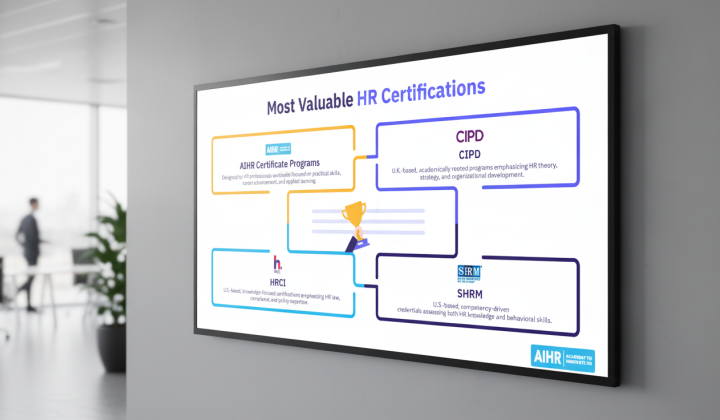
According to AIHR: In the human resources field, earning a certification can significantly boost both career advancement and income. According to the U.S. Bureau of Labor Statistics, professionals with HR certifications (but not a license) earn nearly 30% more per week than those without. This article compares major HR certifications and certificate programs-including AIHR, SHRM, HRCI, and CIPD-focusing on their value, cost, and target audience.
Overview of Certification Options
AIHR provides 16 certificate programs covering key HR areas, and its certificates are accepted for recertification by SHRM, HCI, HRCI, and CIPD. SHRM offers two main certifications: SHRM-CP and SHRM-SCP, with the latter requiring at least three years of strategic experience. HRCI awards aPHR, PHR, and SPHR certifications; the PHR requires one year of experience with a master's degree, two years with a bachelor's, or four years without a degree.
CIPD has three qualification levels:
- Foundation Certificate
- Associate Diploma
- Advanced Diploma
SHRM certification costs $399 for members and $499 for non-members. HRCI fees vary: aPHR at $400, PHR at $495, and SPHR at $595 (each includes a $100 registration fee). AIHR programs are priced at $1,125 per certificate, with Full Academy Access at $1,850. CIPD qualifications range from £1,300–£2,300 for the Foundation Certificate, £1,600–£3,600 for the Associate Diploma, and £3,000–£7,000 for the Advanced Diploma.
Choosing the right certification depends on career goals, location, and current skills. Benefits include career growth, higher salaries, increased credibility, a competitive edge for specialized roles, and alignment with modern industry standards. Key factors to consider are existing experience, desired role, geographic region, budget, learning format, and required competencies.
Anna, a participant in the HR Business Partner 2.0 course, shared her feedback: 'I am very satisfied with the course. It gave me a fresh perspective on how HR can move beyond administrative tasks and play a truly strategic role in driving business results.'
HR certification plays a crucial role in shaping a professional's identity and market position. It not only boosts competitiveness but can also have a substantial impact on earnings. As the HR industry continues to evolve, staying current with emerging trends and standards is essential-making the choice of certification especially relevant for those seeking career growth and professional development.
As you consider your options for enhancing your HR career, understanding the distinctions between various certifications can be crucial. For instance, a detailed comparison of PHR and SHRM-CP certifications highlights their unique benefits and requirements, helping you make an informed decision that aligns with your professional goals.

Read also