Iran and US Hold Highest-Level Talks Since 1979, Focusing on Strait of Hormuz

Iran-US Negotiations
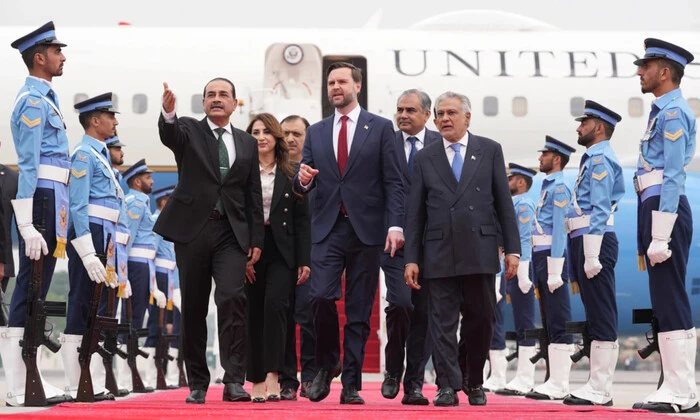
According to Главком: Iran's government has announced the conclusion of a round of direct talks with the United States, held in Pakistan. This dialogue represents the highest-level contact between the two nations since the 1979 Islamic Revolution and the first direct engagement in over a decade. The 14-hour negotiations centered on critical issues, most notably the Strait of Hormuz, a vital maritime chokepoint for global energy supplies. The strait is a conduit for roughly 20% of the world's exported energy resources.
The American delegation was led by Vice President J.D. Vance, Special Representative Steve Witkoff, and the President's son-in-law, Jared Kushner. Representing Iran were Parliament Speaker Mohammad Bagher Ghalibaf and Foreign Minister Abbas Araghchi. Tehran indicated that talks would continue, though no specific dates for resuming the dialogue were set. In a parallel development, technical experts from both sides have initiated an exchange of documents.
Iran's Complex Demands
During the discussions, the American command stated it was preparing conditions to unblock the Strait of Hormuz and begin demining operations. The U.S. reported that two of its naval vessels had already transited the waterway, a claim subsequently denied by Iranian state media. The administration of Donald Trump has refrained from offering official comment on the meeting's conclusion. Previously, Donald Trump has asserted that
'a fair deal is 99% about Iran's complete abandonment of nuclear weapons.'
Iran has put forward a series of stringent demands, including:
- complete control over the strait;
- the imposition of tolls for vessel passage;
- the payment of war reparations;
- the unfreezing of Iranian assets held in Qatar and other foreign banks;
- a cessation of hostilities across the region, specifically in Lebanon.
These demands could significantly shape the future trajectory of the negotiation process between the two countries. The talks come after years of heightened tensions, marked by incidents in the Gulf and the collapse of the previous nuclear accord.
The conclusion of this round of talks signals a potential thaw in relations following a prolonged period of hostility. The focus on the Strait of Hormuz underscores the region's critical importance to global energy security and economic stability. The commitment to continue dialogue and exchange documents suggests both sides are exploring avenues for cooperation, despite the substantial gaps in their stated positions and requirements.
As the discussions between Iran and the U.S. progress, the implications of these talks echo previous statements from Donald Trump, who has expressed skepticism regarding any potential agreements. For a deeper understanding of Trump's perspective on the negotiations and their outcomes, you can explore his recent comments on the matter here.

Read also