The Foundations of Iran's Missile Might: A Network of Foreign Technology

Analyzing Iran's Missile Program
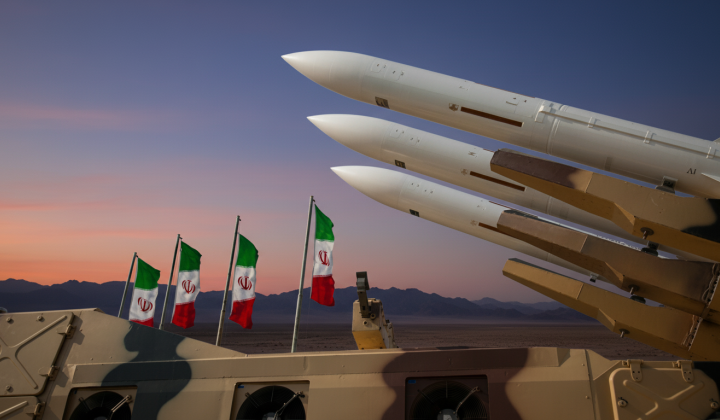
According to ХВИЛЯ: Expert Tamerlan Vagabov has examined Iran's missile program, which was built up over decades using technology acquired from other nations. Iran's possession of a wide array of missiles with varying ranges and launch platforms demonstrates its significant military-industrial achievements.
The program was established with technological assistance derived from Soviet, Chinese, and North Korean designs. A key opportunity arose during the Iran-Iraq war in the 1980s, when Iran gained access to remnants of the Soviet arsenal. This access enabled the country to build a comprehensive military-industrial complex, providing a foundation for its indigenous missile development.
Types of Missiles in Iran's Arsenal
Iran possesses 17 different types of missiles, including both ballistic and cruise variants. Among these are:
- The Chinese-made M7
- Missiles of North Korean Nodong origin
- Analogs of the Russian Kh-55
- Scud missiles
As Vagabov notes,
"These cover practically all ranges except intercontinental-medium-range, short-range, ground-based, ship-based-it has all of these."
Key domestically produced missiles include the 'Shahab-1', 'Shahab-2', and 'Fateh'.
According to the expert, Iran did not merely purchase foreign technology; it localized, modernized, and achieved a stable cycle of internal development. Weapons samples were acquired through connections with North Korea, China, Libya, and other states, highlighting the diverse sources of technological support for Tehran's program.
The advancement of Iran's missile capabilities carries substantial geopolitical weight, enhancing its military potential in the Middle East. This development is a persistent concern for regional neighbors and complicates relations with the international community, particularly the United States and its allies. Iran's progress in this sector reflects a broader trend of military modernization in the region, shifting the local balance of power and increasing its self-sufficiency in arms production.

Read also