New China-Kazakhstan Corridor Aims to Bypass Russia

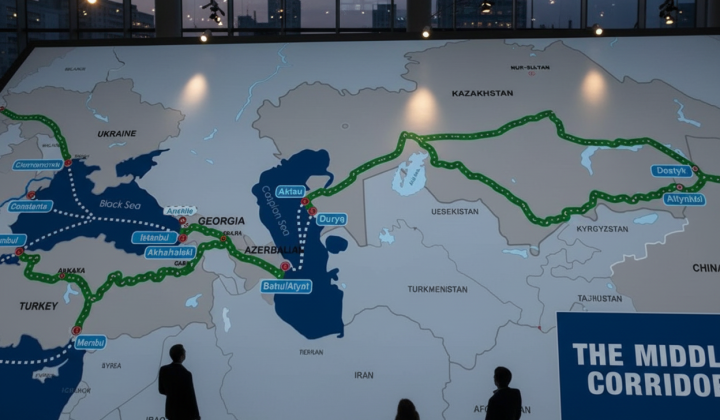
China-Kazakhstan Partnership Intensifies
According to Главком: China and Kazakhstan have stepped up cooperation to expand the Trans-Caspian International Transport Route, also called the Middle Corridor, which is designed to avoid Russian territory. According to information provided by Glavkom, citing Ukraine's Foreign Intelligence Service, the total length of this route exceeds 4,250 km, with the longest overland section passing through Kazakhstan. This development reflects a broader push by both nations to diversify trade routes and reduce reliance on traditional pathways through Russia.
Infrastructure Investment Plans
Kazakhstan Railways (KTZ) plans to invest around $10 billion by 2030 in upgrading infrastructure. In 2026, construction is scheduled for 900 km of new railway tracks, including the Ayagoz-Bakhty section, which will become the third railway crossing on the Kazakhstan-China border. The capacity of this corridor is expected to increase from 55 million to 100 million tons per year by the end of the decade.
KTZ also intends to invest over $100 million in purchasing six new cargo ships. These vessels will operate in the Caspian Sea between the ports of Aktau, Kuryk, and Baku. In 2026, the company is preparing an initial public offering (IPO), with listings expected in London, Hong Kong, and on Kazakhstan's domestic market.
Cargo traffic through the Trans-Caspian International Transport Route totaled 2.76 million tons in 2023, rose to 4.48 million tons in 2024, and reached 4.12 million tons by the end of 2025. During the first quarter of 2026, approximately 173 trains traveled along the route, each consisting of 55 containers. Kazakhstan Railways' annual target for 2026 is 600 trains, and by 2027 the company plans to increase transport intensity by another 67%.
In summary, the intensified collaboration between China and Kazakhstan on developing the Trans-Caspian International Transport Route highlights both countries' desire to improve logistics capabilities and reduce dependence on Russian transport corridors. This could significantly impact the regional economy by boosting trade efficiency and providing more reliable transport links between China, Kazakhstan, and Europe.
The growing demand for efficient trade routes has prompted significant infrastructure developments, as seen in the ambitious railway project between Russia and China. This initiative aims to accommodate record freight volumes, reflecting a shift in regional logistics strategies. For a closer look at how these evolving transport networks are shaping trade dynamics, explore the details in our article on new railway projects between Russia and China.

Read also