Women and Children Played a Key Role in Crafting the Terracotta Army, Chinese Researchers Reveal

Labor Practices in Ancient China Reexamined
According to НВ — Техно: New forensic analysis of fingerprint impressions on the iconic Terracotta Army statues reveals that the workforce behind this monumental project included not only adult men but also women and children. These statues, dating back to the 3rd century BCE, were part of the mausoleum of Emperor Qin Shi Huang near Xi'an, discovered in 1974. The latest findings shed light on the diverse group of artisans involved in this extraordinary achievement.
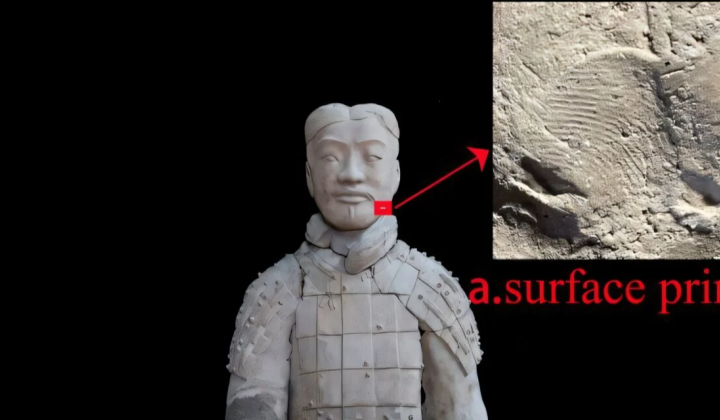
Scientists examined 79 fingerprint samples collected from 36 sculptures within the excavation site labeled T23. Their results show that only 45% of the prints came from adult men, while adult women accounted for 33%, and children under 15 years old made up 22%. This challenges previous assumptions about the labor force and highlights the significant contributions of women and youth in the creation of the Terracotta Army.
Fingerprints were found on various parts of the statues made from raw clay, including armor, hands, and heads. Researchers employed a Bayesian mixture model to analyze the papillary patterns, ensuring highly accurate identification. The study was led by Xiaosa Li from the Mausoleum Museum in Xi'an and published in the Journal of Cultural Heritage.
Rethinking Who Built the Terracotta Army
These groundbreaking results offer fresh perspectives on how labor was organized in ancient China, emphasizing that the construction of the Terracotta Army was a collective effort involving multiple segments of society. Beyond enriching our historical understanding, the research prompts new questions about the roles women and children played in ancient communities.
Fingerprint analysis of these terracotta figures provides valuable insight into the social dynamics and work organization of that era. Discovering that women and children were actively involved in such a monumental project challenges longstanding views of their societal status. This revelation encourages further studies that could deepen our knowledge of social and economic conditions in ancient China, potentially reshaping the historical narrative surrounding one of the world's most famous archaeological discoveries.

Read also