In Real Time, a Chinese AI Model Detects Sunken Ships from Sonar Images

Live Sonar Screening: Chinese AI Spots Shipwrecks
According to НВ — Техно: A deep-learning model developed at the Harbin Institute of Technology, named SW-Net, is designed to recognize shipwreck clues in side-scan sonar (SSS) imagery. It picks out ship-like geometric patterns while the data is being captured, enabling faster and more effective analysis of underwater scans. This kind of automated analysis is especially relevant for marine surveys and underwater archaeology.
SW-Net applies fixed mathematical filters to identify edges at particular angles and uses a directional attention mechanism. To benchmark its performance, the team compared it with seven existing segmentation models on a public dataset of real sonar images from shipwrecks. SW-Net recorded the highest overlap accuracy and top F1 score of all the models evaluated. The system contains roughly 4 million parameters and is able to process sonar images at about 45 frames per second on a single GPU.
Where SW-Net Faces Difficulties
Despite its strengths, SW-Net has some weaknesses. Highly reflective rocks can cause false positives, while false negatives may appear when debris is buried under sediment or broken into many fragments. To address these issues, the researchers recommend fusing sonar with data from other sensor types and collecting multiple sonar scans from different angles or at different times.
- Combining sonar information with other sensor data can lower false-positive rates.
- Using repeated sonar scans from varied angles or times can reduce false negatives.
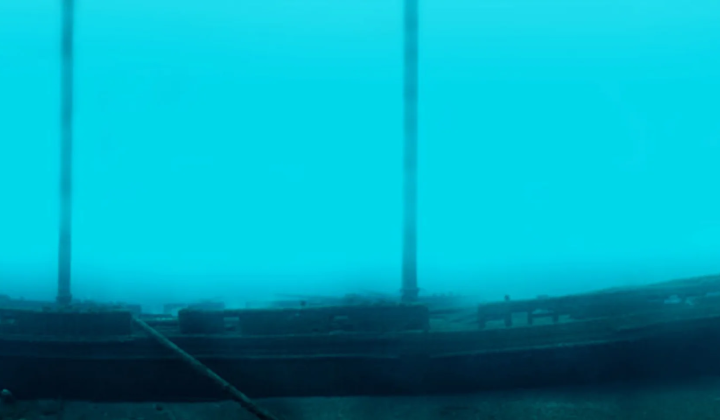
The article references the wreck of the ship Defiance, lying at a depth of 185 feet in Lake Huron, to underline the practical value of accurate detection for underwater exploration and environmental protection. It also mentions that Romania's Oves Enterprise previously tested its Sahara cruise missile, which relies on AI for navigation and in-flight corrections-another sign of AI's expanding influence in research and development.
With SW-Net, researchers have a clear example of how artificial intelligence can advance underwater archaeology and environmental monitoring by making it easier to locate and study submerged wreckage. As the number of shipwrecks and the demand for ecosystem conservation grow, technologies of this kind could become essential tools for scientists around the world.
As underwater exploration technologies advance, the significance of accurate detection systems like SW-Net becomes increasingly apparent. In a related development, the HADALUS underwater strike drone recently showcased its deep-launch capabilities, highlighting the growing intersection of AI and marine operations. Such innovations not only enhance our understanding of submerged environments but also improve the effectiveness of underwater missions.

Read also