NASA Spacecraft Captures Time-Lapse of Mars During Gravity Boost

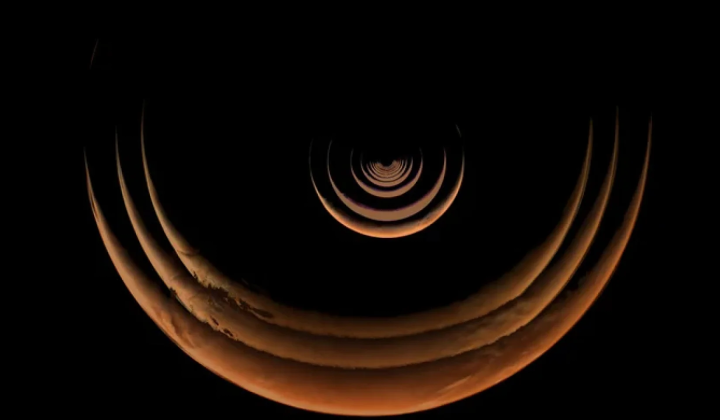
Mars Images from the Psyche Spacecraft
According to НВ — Техно: On July 20 at 4:00 PM, the Psyche spacecraft-currently en route to its namesake asteroid-released thousands of images of Mars taken during its flyby of the planet in May. NASA compiled these images into a time-lapse video showcasing the Martian surface and its south pole. The close approach to Mars occurred from May 2 to May 15, with the spacecraft reaching its minimum distance from the planet on May 15.
Maneuvers and Mission Outcomes
The flyby maneuver was used for a gravity assist, designed to alter the spacecraft's trajectory and increase its speed without expending fuel. During the flyby, the mission also managed to capture images of Mars's moons, Phobos and Deimos.
Jim Bell, a NASA representative, stated: 'The instrument successfully performed its task and delivered rare images of the Red Planet.'
He added that 'the flyby also allowed us to test the camera's accuracy, its sensitivity to scattered light, and to capture Mars's moons Phobos and Deimos from a great distance.'
The spacecraft is expected to reach the asteroid Psyche in 2029. This mission opens up new opportunities for studying not only asteroids but also Mars, marking an important step in the advancement of space exploration.
The data gathered during the flyby could significantly impact future Mars research, as fresh insights into its surface and moons will help scientists better understand the planet's evolution and possible history. The Psyche mission demonstrates how modern technology enables the capture of new images and information about celestial objects, simplifying the study of both asteroids and planets within our solar system.
In addition to the remarkable images captured during the Psyche spacecraft's flyby, recent discoveries on Mars continue to reshape our understanding of the planet. A newly uncovered hidden layer measuring 14 kilometers deep has prompted scientists to rethink Mars' geological history and its potential for past life. Such findings highlight the dynamic nature of ongoing Mars research and the importance of missions like Psyche in uncovering new insights.

Read also