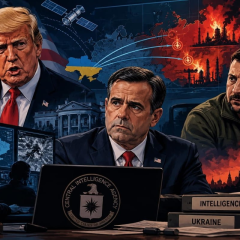
Kremlin Drafts War-Ending Strategy Featuring Territorial Concessions

Dossier Center Investigation
According to ХВИЛЯ: A document from the Russian presidential administration, detailing a propaganda-driven scenario to end the war in Ukraine, has been uncovered by the Dossier Center. Prepared in late winter 2026 and restricted to a select group-including Sergei Kiriyenko-the paper outlines territorial concessions, the retention of Volodymyr Zelenskyy as Ukraine’s president, and efforts to craft a narrative of victory. This revelation sheds light on Moscow’s internal planning as the conflict grinds on.
Key Elements of the Scenario
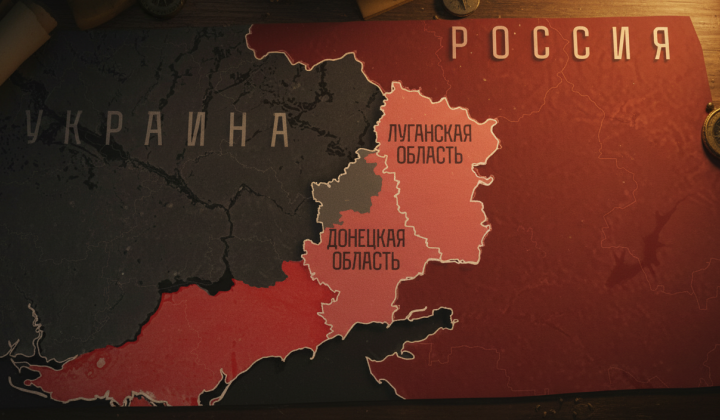
Central to the plan are territorial adjustments, which include:
- ceding the Donetsk and Luhansk regions to Russia;
- formalizing the division of Kherson and Zaporizhzhia regions along the current front line.
Russia currently holds roughly 75% of Kherson and Zaporizhzhia. The document also states that Russian forces would withdraw from Sumy and Kharkiv regions. Meanwhile, European sanctions would remain in place, while U.S. sanctions are slated for removal.
The document notes that denazification would be purely symbolic, and Zelenskyy would stay in power. Negotiations with Ukraine have stalled, particularly after the outbreak of war in Iran, with Kyiv rejecting Russian demands. The Kremlin identifies pro-war Z-bloggers as its most problematic audience, planning an emotional pivot: marginalizing radicals, supporting moderates, and threatening others with accountability.
Additionally, war veterans would be offered commemorative events, reconstruction projects in newly acquired territories, and opportunities to join political parties or sign contracts with the African Corps. The broader Russian public would be promised a controlled thaw, including roundtable discussions, the return of political satire, business success stories, and a limited amnesty. However, the document makes no mention of lifting internet blocks.
The scenario was presented shortly before the Russian president acknowledged some economic difficulties. A power struggle continues within Putin’s inner circle between the presidential administration and the FSB’s Second Service. As the document states:
“Putin bent the West. We thwarted Western plans to expand and prolong the conflict.”
The discovered document underscores the Russian leadership’s strategic intentions for ending the war in Ukraine, involving territorial concessions and the preservation of Ukraine’s current president. This reflects the Putin administration’s efforts to craft a positive image for domestic audiences while avoiding severe political and economic repercussions. As the war persists, these scenarios could significantly influence future negotiations, international relations, and the internal dynamics of both Ukraine and Russia.
As the Kremlin navigates its complex strategy for a potential end to the conflict, insights from European intelligence highlight the underlying tensions and fears that could signal deeper instability within the regime. Understanding these dynamics is crucial as they may influence both domestic and international responses to Russia's proposed concessions.

Read also