Latvia Deploys 'Dragon's Teeth' Barriers Along Its Border with Russia

Concrete Obstacles and Their Strategic Role
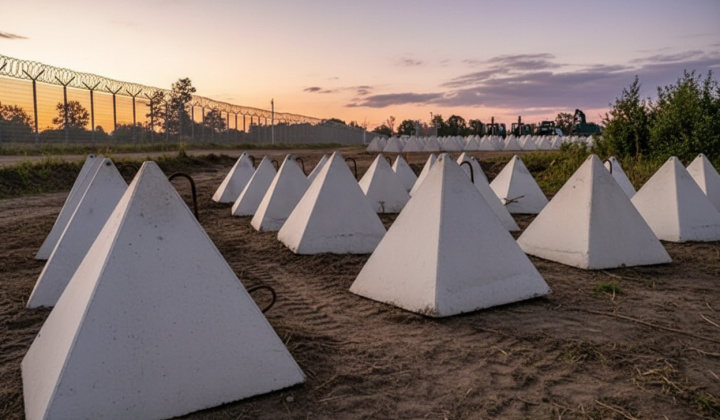
According to Главком: Latvia has begun installing concrete anti-vehicle barriers, commonly referred to as 'dragon's teeth,' along its frontier with Russia as part of the Baltic Defense Line initiative. The first such barriers were put in place by the Latvian National Armed Forces back in May of this year. These obstacles are being positioned near the Latvian-Russian border to strengthen the country's defensive capabilities.
The dragon's teeth are arranged in three rows across sections roughly ten meters wide. Each concrete block weighs about 1.5 tons, making them highly effective at deterring potential threats. Latvia’s total border with Russia and Belarus spans approximately 450 kilometers, and this year, the Latvian military plans to set up over eight kilometers of anti-vehicle infrastructure.
Collaboration with Neighboring Nations
The Baltic Defense Line project is being carried out jointly with Lithuania, Estonia, and Poland, with full completion expected by 2028. Meanwhile, Lithuania’s Ministry of Defense has proposed creating a new defensive zone along its borders with Belarus and the Kaliningrad region. Lithuanian Foreign Minister Kęstutis Budrys emphasized the need for NATO to be prepared to neutralize Russian military assets in Kaliningrad.
Colonel Andris Riksts stated: 'If something happens, we need to be able to destroy them here, because we see in Ukraine-once we give up ground, getting it back is almost impossible.'
In addition to concrete barriers, plans include the future construction of anti-tank ditches and other fortification elements. These measures underscore growing security concerns in the region and Latvia’s-and its neighbors’-commitment to bolstering defense capabilities.
The deployment of dragon's teeth is part of a broader strategy to enhance the defensive posture of the Baltic states amid escalating geopolitical tensions in the region. Participating countries aim to safeguard their security, considering potentially aggressive actions from neighboring Russia. These steps may also improve NATO’s readiness to respond to potential threats emerging in border areas.
As Latvia enhances its border defenses, neighboring Lithuania is also taking significant steps to fortify its own frontier. The recent deployment of minefields and anti-tank defenses demonstrates a coordinated effort among the Baltic states to address regional security challenges. For more insights into Lithuania's strategic measures, read about their latest initiatives here.

Read also