4.1 Billion-Year-Old Martian Meteorite Teg 001 Reveals Evidence of Ancient Water and a Warmer Mars Climate

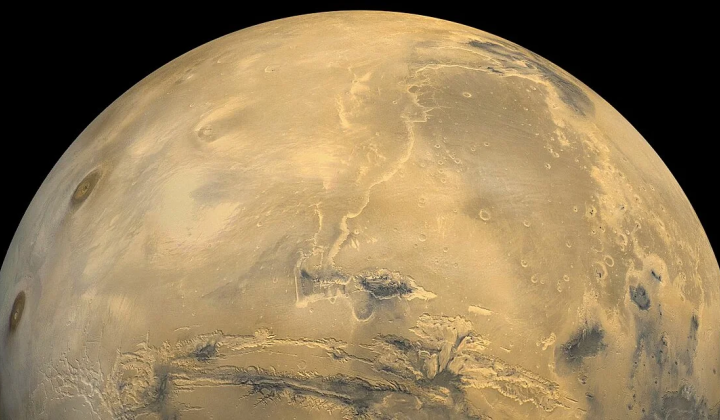
Discovery of the Ancient Martian Meteorite Teg 001
According to НВ — Техно: The meteorite Teg 001, originating from Mars and dating back at least 4.1 billion years, offers crucial insights into the planet's early environmental conditions. Found in the Sahara Desert, this sample contains clear indicators of past water activity and provides a rare window into Mars’ formative years. Published in the journal Science, the meteorite’s age was precisely determined through uranium-lead dating of zircon crystals. Notably, Teg 001 represents the oldest known magmatic rock from Mars.
Unique Features and Research Findings
Investigations were carried out at NASA’s Jet Propulsion Laboratory and the California Institute of Technology. Karl Aeggy, director of the University of New Mexico’s Institute of Meteoritics, emphasizes that
“this is the earliest known magmatic rock identified from Mars.”
The meteorite exhibits an unusual isotopic signature and contains regions with elevated manganese oxide levels, highlighting its distinct composition. Unlike many meteorites composed of mixed fragments, Teg 001 is a pristine sample of a single rock type.
The study suggests that between 4.5 and 4.1 billion years ago, Mars likely had a warmer climate, a denser atmosphere, surface water, and a magnetic field that partially shielded the planet from cosmic radiation. This period, known as the Noachian era, is critical for understanding Mars’ potential habitability. Teg 001 is believed to have originated from the ancient southern highlands of Mars, an area yet to be explored by rovers. Chemical alterations within the meteorite point to early interactions between the rock and water, opening new avenues for studying Mars’ geology and climate history.
The discovery of Teg 001 marks a significant advance in unraveling Mars’ past and its capacity to support life. Research on such ancient samples can deepen our knowledge of the planet’s primordial environment, aiding the design of future Mars missions. This breakthrough also highlights the value of international collaboration in space science, as leading US institutions contributed to the comprehensive analysis of this rare meteorite.
In addition to the findings from meteorite Teg 001, recent research by the Perseverance rover has also revealed ancient magmatic rocks on Mars, providing further insights into the planet's geological history. These discoveries collectively enhance our understanding of Mars' past environments and the potential for habitability. To learn more about the significant findings from the Lac de Charme Plateau, explore the latest updates on this exciting research.

Read also