Ukrainian MP Criticizes Zelenskyy's Call to Mobilize Parliamentarians

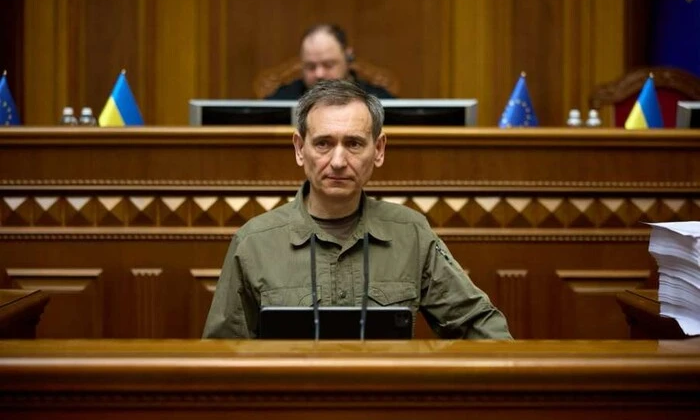
Fedor Venislavskyi's Response to the President's Remarks
According to Главком: Fedor Venislavskyi, a member of Ukraine's parliamentary committee on national security, defense, and intelligence, has dismissed President Volodymyr Zelenskyy's recent suggestion of mobilizing deputies as a political statement that will not boost motivation. Venislavskyi emphasized the ongoing lack of systematic dialogue between the branches of government, a critical issue during wartime.
President Zelenskyy had previously stated that deputies wishing to resign their mandates during martial law should either continue working in parliament or go to the front. Venislavskyi finds such declarations unconstructive.
"Any statements about negative consequences for deputies if they stop working in the Verkhovna Rada are, I believe, political statements," said Fedor Venislavskyi.
Systemic Dialogue and Parliamentary Challenges
Due to martial law, the Verkhovna Rada cannot dissolve itself, and the ruling coalition is formally maintained based on its original roster. However, as Venislavskyi noted, deputies vote according to their personal convictions and do not always adhere to coalition discipline.
"Deputies vote according to their own beliefs. It is not necessary to belong to the coalition and vote with it. Everyone votes as they see fit," stated Fedor Venislavskyi.
The number of deputies in Ukraine's parliament has decreased over the past year. By the end of 2025, only 395 deputies remained. Venislavskyi stressed that the key problem is the absence of systematic, candid dialogue between parliament, the majority faction, the government, and the President's Office regarding the need to pass specific decisions, particularly in the context of the budget deficit. This political friction occurs as Ukraine continues to defend itself against a full-scale invasion.
Venislavskyi's comments highlight persistent communication issues between Ukraine's governing institutions, which are especially critical under martial law. With a shrinking parliamentary body and instability in decision-making, the importance of open dialogue becomes even more apparent for effective national governance. The president's remarks on mobilizing deputies also point to the heightened demand for political accountability during a time of immense military challenge.

Read also