Are Words Like 'Pee,' 'Poop,' 'Crap,' and 'Piss' Acceptable? Linguists Weigh In

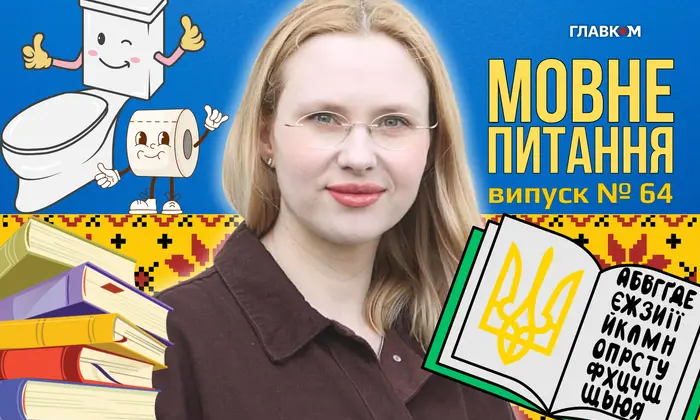
Language Matters: A Deep Dive
According to Главком: In a new installment of the 'Language Matters' column on Glavcom, led by philologist Olga Vasylieva, experts explore the complexities of Ukrainian vocabulary, including the usage of certain informal terms. This edition examines words such as 'pisiaty' (to pee), 'kakaty' (to poop), 'sraty' (to crap), and 'stsiaty' (to piss), along with translations of idioms and correct preposition spelling.
The words 'pisiaty' and 'kakaty' appear in the academic explanatory dictionary (SUM-20). According to this source, 'pisiaty' is an imperfective, colloquial term synonymous with 'mochytysia' (to urinate). Similarly, 'kakaty' is listed as an imperfective, childlike, and colloquial word meaning 'vyporozhniatysia' (to defecate). In contrast, 'sraty' and 'stsiaty' are currently considered vulgarisms, though they are recorded in slang and jargon dictionaries. Older dictionaries, such as those by Umantsi and Spilka, Hrinchenko, Krymskyi and Yefremov, also include 'stsiaty' and 'sraty'.
Krymskyi's dictionary provides synonyms for 'mochyty(sia)' (to urinate), including:
- sechyty
- pudyty
- stsiaty
- sykaty
- vidlyvaty (vodu)
- lovyty rybu
- siusiaty
- tsiurkaty
- buryty
For 'vyporozhniatysia' (to defecate), synonyms include:
- kaliaty
- kaliatysia
- vykaliatysia
- nakladaty
- naklasty
- vidkladaty
- vidklasty
- khodyty
- pity do vitru
- do dvoru
Folklore researcher Matviy Nomys documented the word 'kakaiut' in folk songs, specifically in reference to dogs.
In a Ministry of Health guideline titled 'Constipation in Adults,' the term 'kal' (feces) is used instead of 'stilets' (stool). The idiom 'iz hriazi v kniazi' (from rags to riches) translates into Ukrainian as 'Z Ivana v pana' (from Ivan to a lord). Important preposition usage is also addressed: according to §25, 'zi' is primarily used before words starting with multiple consonants, such as 'zi zbroieiu' (with weapons), 'zi znakom' (with a sign), 'zi stola' (from the table), 'zi shkoly' (from school), and 'zi Lvova' (from Lviv).
Analysis of Modern Terms
The word 'togorich' (last year) appears 117 times in the GRAC corpus, while 'mynulorich' occurs 3,584 times, and 'torik' is recorded 51,881 times. The verb form of the term 'iniektsiia' (injection) according to SUM-20 is 'iniektuvaty' (to inject). The English word 'toddler,' referring to a child aged 1 to 3, is discussed in the context of the Ukrainian age scale: newborn (0-28 days), infant (up to 1 year), toddler/maluk (1-3 years), and preschooler (4-5 years).
In a discussion about the words 'kruh' (circle/disk) and 'kolo' (circle), it is noted that according to the explanatory dictionary, they are synonyms. However, in mathematics, 'kolo' is defined as a closed curve, while 'kruh' is the area bounded by that curve. The word 'papa' in the sense of 'father' is recorded only in Krymskyi's dictionary; in other dictionaries, it is interpreted as the Pope or 'bread.'
It is known that in Olga Kobylianska's novel 'Tsarivna' (The Princess), there is a heroine named Lena. The word 'prelest' (charm) translates as 'prynada,' 'vaba,' or 'povaba.' Interestingly, Gollum's phrase 'My Precious!' from Tolkien's novels was rendered in the Ukrainian dub as 'Moie zolotse!' (My little gold!).
Regarding forms of address for women, a married woman can be called 'pani,' 'pania,' or 'paniia,' with 'pania' and 'paniia' marked as colloquial. An unmarried woman is referred to as 'panna,' with the colloquial form 'panianka.' Notable changes in other countries include France, where local authorities, at the request of a feminist organization, banned the use of 'mademoiselle,' leaving only 'madame.' Germans abandoned 'Fräulein' 50 years ago, retaining only 'Frau,' while in English-speaking countries, men are addressed only as 'Mister,' in Spanish-speaking countries as 'Señor,' and in Italian as 'Signore.'
Thus, the 'Language Matters' column continues to explore and popularize Ukrainian vocabulary, emphasizing the importance of understanding the language and its cultural context.
This column serves as a valuable resource for learning and comprehending the Ukrainian language, as it highlights not only lexical nuances but also cultural aspects that influence language use. Analyzing terms, their meanings, and usage in various contexts can help readers gain a deeper appreciation of the richness of Ukrainian vocabulary and its evolution in modern society.
As the discussion around informal vocabulary continues, understanding the nuances of language becomes increasingly vital. For those interested in a deeper exploration of linguistic distinctions, a recent article sheds light on the difference between specific terms in Ukrainian, such as 'krovososnyi' and 'krovosysnyi.' This analysis not only enhances our grasp of vocabulary but also highlights the evolving nature of language. Discover more about these distinctions in the full article here.

Read also