Russia’s Interior Ministry to Force Migrants Into Buying Surveillance-Enabled Phones

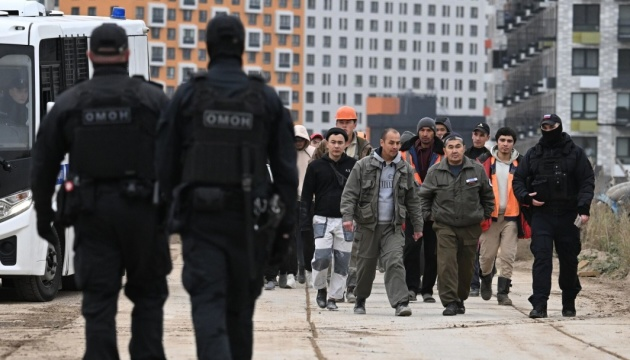
Russia Tightens Grip on Migrants
According to Укрінформ — Мігранти: Ukraine’s Foreign Intelligence Service (SZR) has reported that Russia’s Ministry of Internal Affairs intends to mandate that migrants purchase mobile phones equipped with electronic profiles for round-the-clock geolocation tracking and comprehensive surveillance. Under these new rules, foreigners entering Russia would be required to keep location services continuously active. The pilot program is currently being tested in Moscow and the Moscow region through a mobile application called 'Amina.'
According to the SZR, the sole and explicit objective of this initiative is to establish total oversight of migrants. If the app fails to transmit location data for just three days, the individual is automatically added to a registry of monitored persons, which can lead to:
- bank card freezes;
- a ban on financial transactions;
- deportation.
“The consequences are immediate and severe: freezing of bank cards, a ban on any financial operations, and inevitable deportation,” the SZR stated.
Legislative Overhaul
Additionally, Russia’s State Duma has tightened laws concerning foreign workers. Tax authorities are now required to automatically share data on migrants’ earnings with the Ministry of Internal Affairs every three months. Migrants, in turn, must file annual income declarations. Failing to meet criteria-such as insufficient work duration over the year or income below the subsistence minimum-results in the revocation of residence permits or temporary stay documents.
Regarding migrant children, they are allowed to remain in Russia only for the duration of their parents’ work patents. Once they turn 18, these children must either obtain their own work patent or leave Russia within one month.
“Minors can stay in Russia solely for the period covered by their parents’ patent,” the SZR emphasized.
The Russian authorities also plan to create a unified database of mobile device IMEI codes, further underscoring the trend toward centralized control over migrants. This year, Russia aims to recruit around 20,000 foreigners into its army, signaling deeper integration of migrants into various aspects of public life.
These measures reflect the Russian government’s escalating oversight of foreign nationals within its borders. Amid growing societal and political tensions, such policies could have far-reaching implications for migrants’ rights and their integration into Russian society. At the same time, the legislative changes and new surveillance technologies highlight the state’s drive to enhance administrative control in this area. This may raise concerns among migrants themselves and the international community regarding human rights compliance.
As Russia implements stricter measures for migrants, it is important to consider how these changes contrast with the opportunities available to foreign fighters in Ukraine. While migrants face increasing surveillance and stringent regulations, those serving in Ukraine's army can apply for citizenship after just one year of service. This highlights a significant difference in the treatment of foreigners depending on their circumstances. For more on the contrasting policies regarding foreign nationals, read about how foreign fighters can gain Ukrainian citizenship.

Read also