Accessible Deep Moon Rocks Found After Proto-Planet Strike

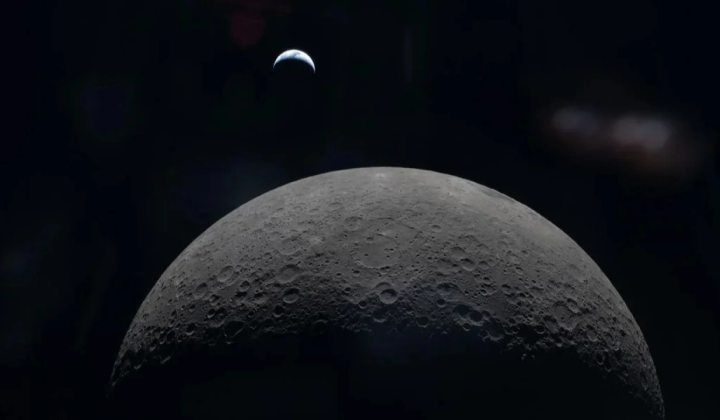
New Findings from the Moon's South Pole–Aitken Basin
According to НВ — Техно: On June 23, researchers published a study on the South Pole–Aitken basin, revealing that this massive lunar feature was created by a low-angle collision with an object possessing an iron core and a rocky mantle. Located on the far side of the Moon, this site is recognized as the largest and oldest known impact crater on our celestial neighbor.
The research team, led by scientists from the Center for Lunar Origin and Evolution at the Southwest Research Institute in the United States, determined that the impacting body traveled from north to south and struck the lunar surface at a shallow angle. The collision carved out a deep, uneven depression, with extreme heat melting rocks at its center. Enormous amounts of material from the Moon's crust and mantle were ejected into space, much of which later fell back to the surface.
Why This Discovery Matters
By employing high-precision gravity measurements and models of the crust and mantle, scientists identified signs of substantial mantle-derived rock deposits. William Bottke noted that
“the impact was so powerful it could have brought material from the Moon's deep layers, including parts of its mantle, to the surface”
. Subsequent impacts within the basin may have exposed some of these hidden deposits, pushing them into view. Gabriel Gowan emphasized that
“the impact ejected enough deep material to form large deposits that remain accessible even today”
.
The results of the impact simulation and gravity analysis not only clarify how the South Pole–Aitken basin formed but also highlight promising locations to search for rocks that could reveal the Moon's origin and evolution. Shigeru Wakita noted that 'the model reproduced the basin's shape and allowed us to determine the characteristics of the impacting object, as well as the direction of the strike.' New models suggest that mantle-derived rocks may be widespread across various areas of the Moon's south polar region.
Some of these rocks may be located in zones being considered for the Artemis mission landings. Previously, scientists believed that material from the greatest depths was concentrated far from the lunar south pole. Consequently, these findings open up fresh opportunities for lunar study and exploration.
The outcomes of this research could significantly influence future space missions, particularly the Artemis program, which aims to return humans to the Moon and survey its surface. The identified mantle rock deposits may serve as a vital source of information about the Moon's geological history and evolution, helping to unravel the broader processes of planetary formation. Investigating basins like South Pole–Aitken could be key to solving many mysteries surrounding our cosmic neighbor.
In addition to the recent findings regarding the South Pole–Aitken basin, ongoing research is uncovering fascinating processes on the Moon's surface. For instance, a recent study reveals how solar wind influences water formation, shedding light on the Moon's complex environmental interactions. Understanding these processes may further enhance our knowledge of lunar geology and the history of water on the Moon.

Read also