Warm Atlantic Water Is Eating Away at Greenland's Glaciers — Data from Tagged Narwhals Show Why

Climate Probes With Tusks
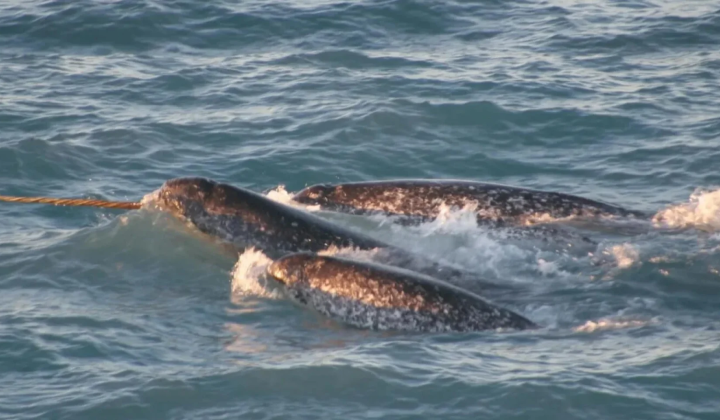
According to НВ — Техно: Researchers from the Greenland Institute of Natural Sciences and the University of Copenhagen, working together with local Inuit hunters, managed to study remote Arctic waters by attaching sensors to six narwhals. Because heavy ice often prevents research vessels from entering these fjords, animal-borne instruments can provide critical information where ships cannot go. The devices recorded water temperature, salinity, and dive depth, and their readings offer direct evidence that warm Atlantic water is reaching Greenland's fjord systems and undermining the glaciers from below.
What the Findings Reveal
The narwhals traveled hundreds of kilometers into ice-choked areas that remain largely inaccessible to ships. Their measurements show that the equilibrium between cold polar waters and warmer Atlantic currents is shifting rapidly, and the change is clearly unfavorable for glacier stability. The findings were published in the journal Science Advances.
Carried out with hunters from the settlement of Ittoqqortoormiit, the project opens a new path for studying climate change in some of the most difficult-to-reach parts of the Arctic. The data also lend weight to concerns about substantial ecological transformation in the region. The paper bears DOI 10.1126/sciadv.adr1424 and is dated September 2, 2026.
Bringing together local knowledge and scientific fieldwork can make monitoring far more effective in remote environments. As global climate shifts intensify, such collaborations are becoming essential for understanding how Arctic processes are unfolding and what their wider environmental effects may be.
Understanding the dynamics of climate change is crucial, especially as shifts in temperature impact polar regions. For a broader perspective on how similar phenomena are affecting other areas, explore how land uplift triggered a freezing event in Antarctica, revealing complex interactions between geological and climatic factors. This insight can deepen our grasp of the ongoing transformations in the Arctic and beyond, as detailed in why Antarctica experienced freezing before the Arctic.

Read also