NASA Ends Mars MAVEN Mission After Critical Failure

MAVEN Mission Concludes
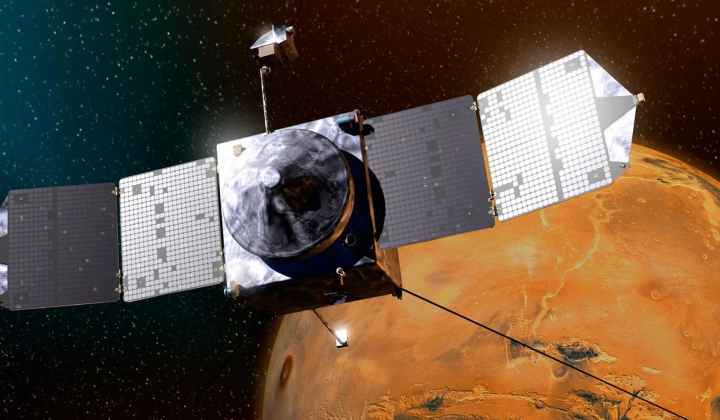
According to НВ — Техно: NASA has officially ended the MAVEN mission orbiting Mars following a malfunction that occurred in December. After more than 11 years of service, the spacecraft-designed to study the Red Planet's upper atmosphere-sent its last data transmission to Earth on December 6 before entering safe mode. During the failure, MAVEN passed behind Mars, and no signal was received after it emerged. Engineers detected signs of a major anomaly that caused the spacecraft to spin at an unusually high rate. This rapid rotation likely disrupted MAVEN's orbit and led to a swift depletion of its batteries.
Spacecraft Assessment
Once battery levels dropped to critical lows, the communication system lost power. In February, NASA assembled a special review board to evaluate the spacecraft's condition. Experts concluded that MAVEN can no longer perform scientific observations or relay data. The root cause of the anomaly remains unknown, and NASA plans to release the board's final report later this year.
Launched in November 2013, MAVEN was the first mission fully dedicated to exploring Mars' atmosphere. Over its lifespan, it investigated how solar activity stripped atmospheric particles from the planet over billions of years.
"The project leaves a significant scientific legacy, and the spacecraft vastly expanded our understanding of Mars' atmosphere and planetary evolution."
Shannon Curry, MAVEN Principal Investigator at the University of Colorado
NASA's Director of Planetary Science, Louise Prockter, confirmed that the mission's findings will continue to inform future research. She also noted that MAVEN's data helps assess radiation levels astronauts may face during upcoming crewed missions to Mars. NASA intends to preserve the mission's full data archive so scientists can use it in ongoing and future studies.
The end of the MAVEN mission underscores the importance of studying Mars' atmosphere, which has direct implications for future human exploration of the planet. The research conducted by this spacecraft laid the groundwork for further investigation of the Martian environment and its potential to support life. Preserving the mission's data also opens new avenues for scientists to understand planetary evolution and prepare for upcoming expeditions. MAVEN's findings will remain relevant for continued research, potentially aiding preparations for crewed flights to Mars in the years ahead.
As NASA concludes the MAVEN mission, the agency is simultaneously advancing its efforts for future exploration. Recently, NASA has chosen four companies to develop a lunar base, highlighting its commitment to expanding human presence beyond Earth. This initiative is essential as the findings from MAVEN will aid in understanding the conditions astronauts may encounter on Mars, thereby enhancing safety in upcoming missions.

Read also