At NATO Summit in Ankara, Europe Weighs Defense Without US as Trust in Trump Falters

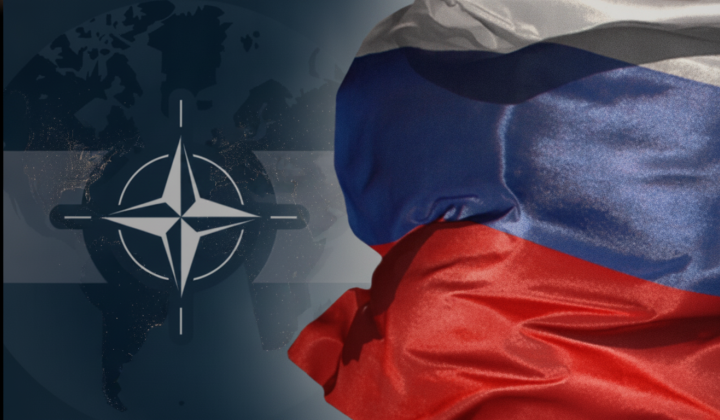
NATO Summit in Ankara: A New Security Calculus
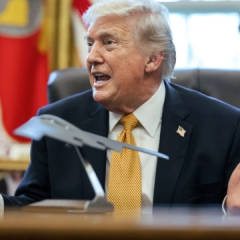
According to ХВИЛЯ: During a NATO summit held in Ankara, European allies are exploring scenarios for defending the continent without American involvement. These discussions stem from a growing loss of confidence in President Donald Trump, whose actions over the past year have unsettled allied nations. Among the cited triggers were:
- a threat to forcibly take Greenland from Denmark;
- a reduction of the US military footprint in Europe;
- and the launch of a six-month review of America's defense posture on the continent.
Additionally, Trump has reproached allies for what he sees as insufficient support in the war against Iran.
European governments, now skeptical of Trump's willingness to provide assistance, are planning to take on a greater role within NATO’s command structure. Yet, despite these ambitions, Europe cannot replicate critical US capabilities such as intelligence, air defense, and aerial refueling. The alliance’s defense plans, approved a year ago, assumed the United States would shoulder roughly 40% of the wartime burden. Meanwhile, there is almost no appetite in European capitals to transfer more military authority to the European Union.
NATO and Europe Face a New Reality
For the past three decades, NATO has prepared for counterinsurgency campaigns, but it now confronts the prospect of a high-intensity war with Russia. In this context, Ukraine serves as a model for European nations due to its expertise in using low-cost drones and rapid production cycles.
“We are really not in the best shape. Trump now has his own leverage-Iran. Whatever we do, he will say: NATO wasn’t there for us.” - a senior French official
A British official remarked, “The American way of war is to apply overwhelming force against an enemy’s center of gravity and strip away its ability to fight. Europeans cannot bring overwhelming force to bear.” Meanwhile, a high-ranking European military officer stressed that “Ukraine’s advantage is that it understands exactly what war it is fighting. It can adapt and evolve in real time.”
François Heisbourg, a French analyst, weighed in on the shifting landscape: “We cannot expect Trump to help us. We will have to start our own business-within NATO, I think, but a NATO where the Americans play an increasingly smaller role.” Thus, at the Ankara summit, European countries are searching for new ways to ensure their security amid a rapidly changing international environment.
The discussions at the NATO summit in Ankara reflect major shifts in the global security landscape, as European nations seek to adapt their defense strategies to a diminishing American influence. This could lead to stronger European military cooperation and greater autonomy in security matters. However, serious challenges remain, including the need to secure sufficient resources and technology to maintain an effective defense without US support.
As European nations navigate this shifting landscape, the recent comments by Trump at the NATO summit highlight a growing divide. His assertion that the conflict in Ukraine is "not America's problem" underscores the challenges faced by European allies in securing their own defense. For a deeper understanding of Trump's stance and its implications for NATO, read more about his remarks regarding the Ukraine war.

Read also