California Researchers Pioneer Technique to Decipher Charred Scrolls from Herculaneum

Lead in Ink Unlocks Secrets: A Breakthrough Method for Reading Burned Herculaneum Scrolls
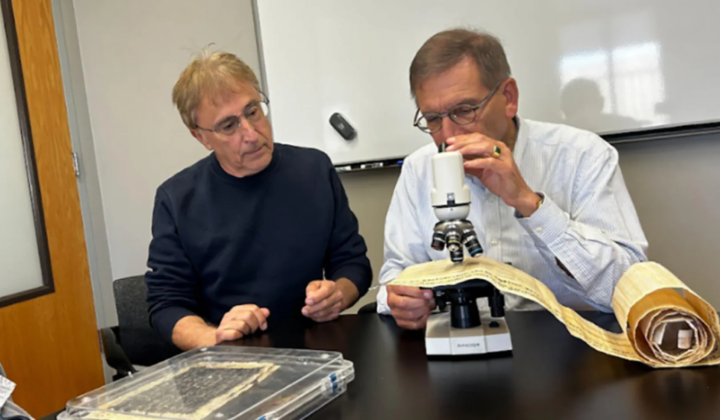
According to НВ — Техно: A team from the University of California, Berkeley, has introduced an innovative technique that allows scholars to read the charred scrolls unearthed from Herculaneum-preserved by the catastrophic eruption of Mount Vesuvius in 79 AD. This approach hinges on detecting traces of lead in the ink using advanced X-ray computed tomography combined with a portable X-ray fluorescence scanner. Remarkably, in 2023, researchers successfully virtually unrolled one of these ancient scrolls, revealing texts containing excerpts from the Bible and Star Wars, marking a significant milestone in archaeology and literary history.
The ancient library at Herculaneum, uncovered in 1751, housed these fragile scrolls that were carbonized during the volcanic disaster. Although lead-based ink was previously identified in only two fragments, a comprehensive search for lead signatures had not been conducted until now.
Douglas Saylor, a retired inventor and co-author of the study, explained, "Lead in the ink creates an incredibly strong signal, so it's essential to actively seek out scrolls that contain lead."
To validate their method, the researchers crafted a replica scroll using Egyptian papyrus, reed pens, and traditional Japanese lampblack ink. High school students wrote on this replica with inks varying in lead concentration. The scroll was then rolled, sealed in a low-oxygen steel container, and subjected to high heat to simulate charring. The resulting 3D CT scans highlighted the glowing ink, enabling algorithms to virtually unwrap the scroll and display the written text.
Additionally, the study utilized an affordable, portable X-ray fluorescence scanner capable of detecting inks with minimal lead content. Lia Packard-Grams, a papyrologist at Berkeley who advised the team, noted, "Damaging a model is no big deal. Damaging a 2,300-year-old artifact, however, would unleash a flood of archaeologists on you." This underscores the importance of non-invasive techniques in preserving priceless relics.
These groundbreaking findings were published in the journal PLOS ONE, highlighting how cutting-edge technology is revolutionizing the study of ancient artifacts.
Future Implications of This Innovation
This novel technique promises to transform how researchers approach the study of charred ancient manuscripts, offering archaeologists and historians new opportunities to recover texts once thought irretrievably lost. By employing modern scientific tools, we can enhance the preservation and understanding of invaluable cultural heritage from antiquity.
As researchers continue to uncover the mysteries of ancient artifacts, innovative techniques are paving the way for significant discoveries. For instance, a recent study demonstrates how magnetic analysis can reveal counterfeit ancient pottery, showcasing the evolving methods in archaeology that enhance our understanding of historical objects. Such advancements not only deepen our knowledge but also set the stage for future explorations into the past.

Read also