Study in China for Ukrainians: Admission, Documents and Conditions

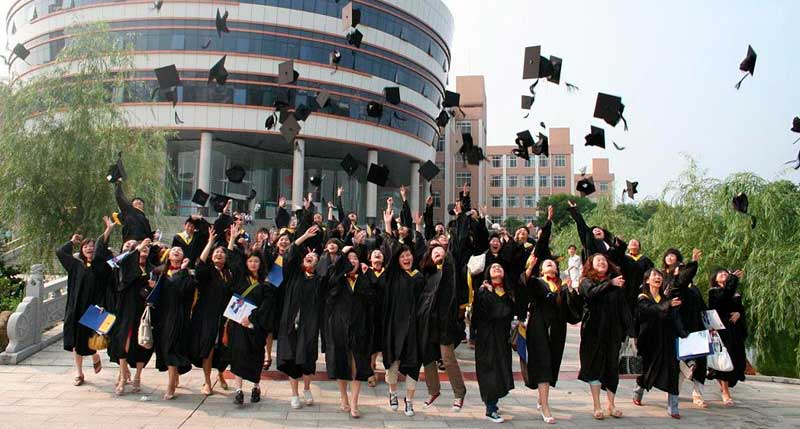
China offers many opportunities for many. It is not even about traveling, but about studying. These are great opportunities for foreigners, including Ukrainians.
How to get into a university in China: stages of admission, submission of documents and enrollment deadlines
Studying in China for Ukrainians in 2026 is available at the levels of bachelor's, master's, doctoral programs, language courses, and individual preparatory programs. Foreign citizens can apply to Chinese universities for programs taught in Chinese or English. At the same time, each university independently sets part of the requirements for applicants, so there is no single set of conditions for all institutions.

For admission, important factors include prior education, academic results, language proficiency, age, the condition of documents, and compliance with a specific educational program. For bachelor's programs in the 2026/2027 academic year, a requirement regarding the result of the China Scholastic Competency Assessment, or CSCA, is also applied for foreign entrants. The specific subjects of testing depend on the chosen specialty.
Ukrainian applicants can choose between state and other accredited institutions, large research universities, specialized institutes, and language schools at universities. When choosing, it is worth checking not only the ranking but also the language of instruction, program accreditation, document requirements, cost, availability of dorms, scholarship opportunities, and rules for foreign students.
The level of the program is particularly significant. A full secondary education is usually required for a bachelor's degree, a bachelor's degree diploma for a master’s program, and a relevant master's diploma for a doctoral degree. Some programs may impose additional conditions, including a minimum average grade, profile subjects, recommendations, a motivation letter, a research plan, or a portfolio.
In 2026, the requirements for foreign students became more structured. Therefore, before submitting documents, it is important to check the specific admission rules of the particular university and the specific year of enrollment. Conditions that were valid several years ago do not always correspond to current requirements.
Admission to a Chinese university consists of several sequential stages. First, the level of education and specialty are determined, after which the university and specific program are chosen. It is necessary to check whether the institution accepts foreign students, in what language the instruction is conducted, and what documents need to be submitted.
The next step is to verify the academic requirements. For a bachelor's program, a document on complete secondary education is required; for a master's program, a bachelor's diploma is needed; for a doctoral program, a master's diploma is necessary. If the applicant is still studying in their final year, some universities allow them to submit a certificate of expected completion, but the final diploma must be provided by the time of registration.
In 2026, for foreigners applying for bachelor's programs, more universities require CSCA results. The testing is conducted throughout the year, and the set of subjects depends on the specialty. For humanities programs, the requirements may differ from engineering, economic, or natural science programs.
After that, language certificates are prepared. For studies in Chinese, an appropriate level of HSK is often required. For English-taught programs, the university may require IELTS, TOEFL, Duolingo, or another acceptable certificate. Some universities allow exemptions from the language test if prior education was conducted in the relevant language, but this needs to be confirmed with official documents.
Applications are usually submitted through the university's online system. Scanned copies of the passport, education documents, academic certificates, language certificates, and other materials are uploaded. Some institutions may additionally charge a registration or application fee.
After the initial check, the university may invite the applicant for an interview, request additional documents, or clarifications. For master's and doctoral programs, recommendation letters and research plans may also be significant. After a positive decision, the applicant receives an Admission Notice and the documents needed to apply for a student visa.
Deadlines depend on the university. For the fall intake, applications are often accepted in the spring and early summer, but some programs open applications earlier or establish several waves of enrollment. Scholarship programs may have deadlines that end earlier than self-financing.
After receiving the enrollment documents, it is necessary to apply for a visa, prepare for the flight, and undergo registration procedures at the university. For long-term studies upon arrival, a residence permit of the appropriate type is also processed.
What documents are required for studying in China: certificates or diplomas, language test results, and other documents
The main package of documents depends on the level of education and the specific program. For bachelor's programs, the primary proof of academic preparation is a certificate of complete secondary education and an academic transcript with grades. For a master's program, a bachelor's diploma and transcript are submitted, while for a doctoral program, a master's diploma, academic documents, and materials related to future research are required.

Education documents often need to be translated into Chinese or English. If the university requires notarization, the translation must be made according to established rules. An unofficial self-translation may be unacceptable.
A foreign passport is a mandatory document. Its data must be entered into the application exactly as specified on the page with personal information. It is also essential to check the validity period of the passport. For a visa and further documentation, it is better to have a passport with ample validity period.
For studying in Chinese, a HSK certificate is submitted. The minimum level depends on the program. In many universities, for bachelor’s programs, the sufficient basic threshold is HSK 4, while for certain humanities, language, or master's programs, HSK 5 or even HSK 6 may be required.
For English-taught programs, proof of English proficiency is required. A specific threshold is set by the university. For example, in 2026, some Chinese universities require IELTS at a level of 5.5–6.0 or TOEFL around 72–85 points. Other institutions may set higher requirements.
For admission to a bachelor's program in the 2026/2027 academic year, consideration of CSCA is necessary. Universities determine which test subjects are necessary for specific specialties. Therefore, preparation for admission should ideally start not with submitting an application, but by checking the testing requirements.
The package may also include:
- motivation letter or personal statement;
- resume;
- recommendation letters;
- study plan or research plan;
- medical certificate or Foreigner Physical Examination Form;
- certificate of no criminal record;
- proof of financial support;
- documents regarding previous awards and academic achievements;
- portfolio for creative specialties;
- guardian documents for applicants who are under 18.
Not every university requires the entire list at once. For example, for creative specialties, a portfolio may be needed, while for technical programs, results from specialized tests may be required. For master's programs, recommendations and research materials become more important.
A Ukrainian applicant also needs to think in advance about the documents that may be required for the visa. After enrollment, the university provides the necessary documents for the X1 or X2 visa depending on the duration of studies.
Cost of studying in China: prices at universities and additional expenses for students
The cost of studying in China significantly depends on the university, city, specialty, level of education, and language of instruction. Therefore, there is no single amount that can be applied to all Ukrainian students.
In 2026, the cost of studying in bachelor's programs at many universities may range from approximately 15,000 to 40,000 yuan per year. In prestigious universities, medical institutions, some engineering, and international programs, the amount may be higher. For master's and doctoral programs, prices also depend on the direction.
For example, some programs in 2026 set fees of around 16,000–22,000 yuan per year. In other universities, the cost may be even higher. Medical and some specialized programs traditionally belong to more expensive areas.
Accommodation is charged separately. University dormitories can cost from several thousand yuan per year to significantly more depending on the city and type of room. Single rooms are usually more expensive than double or triple rooms.
In addition to tuition and accommodation, students need to consider:
- health insurance;
- medical examination;
- application for residence permit;
- textbooks and study materials;
- food;
- transport;
- mobile communication and internet;
- air travel;
- visa and documentary expenses;
- personal expenses.
For example, some universities in 2026 set insurance costs at around 800 yuan per year, while the medical examination fee can reach several hundred yuan. The cost of dormitory accommodation also varies significantly. Universities in large cities often have more expensive housing than institutions in smaller cities.
The monthly budget depends on the city. In Beijing, Shanghai, Shenzhen, or Guangzhou, expenses for rent and daily needs can be significantly higher than in central and western Chinese cities. Living in a university campus usually allows better control of expenses.
When comparing universities, it is essential to look not only at the tuition fee. A low annual cost may be offset by higher accommodation costs or a lack of scholarship funding. Conversely, a university with a higher base fee may offer grants, free dormitory accommodation, or other benefits.
For a Ukrainian student, the most practical approach is to compile a complete annual budget: tuition, accommodation, food, insurance, transport, documents, and a reserve for unforeseen expenses.
Scholarships and grants for Ukrainians in China: opportunities for free or partially funded studies
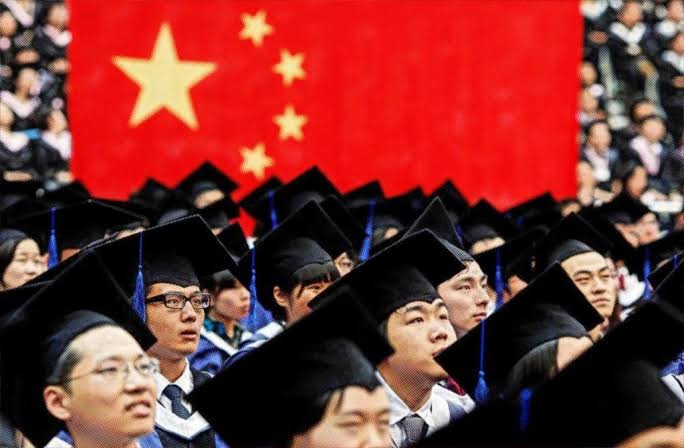
There are several types of financial support for foreign students in China. The most well-known is the Chinese Government Scholarship, or the China government scholarship. In addition to the government program, provincial and municipal scholarships, specific university grants, programs for studying the Chinese language, and other forms of support may be available.
The Chinese Government Scholarship may cover tuition fees, accommodation, health insurance, and a monthly stipend. The specific package depends on the type of program, level of study, and the conditions of the respective competition.
Some universities offer their own scholarships. These can be full or partial. A full scholarship sometimes covers tuition and accommodation, while a partial one may reduce only the tuition fee.
For Ukrainians, it is important to check through which channel the application is submitted. Some government programs are handled through diplomatic missions or relevant authorities, while others are submitted directly through the university. University scholarships may have a different application form and deadline.
Competitive selection usually considers academic results. For master's and doctoral programs, recommendations, research plans, academic achievements, and the candidate's relevance to the specialty may also be assessed.
For bachelor’s students, school grades, language preparation, and entrance exam results, if required by the program, are significant. In 2026, an important element for many bachelor’s applications is CSCA.
When applying for a scholarship, one should not limit themselves to just one university if the program rules allow for multiple submissions. Each program has its own conditions, so it is necessary to separately check the requirements, deadlines, and list of documents.
A scholarship may cover:
- full or partial tuition payment;
- accommodation in campus housing;
- health insurance;
- monthly financial allowance;
- in some programs - other anticipated expenses.
It is important to understand that receiving a scholarship does not always mean completely free accommodations. Some programs do not cover airfare, visa expenses, personal expenses, or part of the utility payments. Therefore, the conditions of the specific grant should be read thoroughly.
For a Ukrainian applicant, a scholarship can significantly change the overall budget for their studies. However, competition for full funding is high, so it is advisable to consider government, university, and regional programs simultaneously.
Student visa to China: what type of visa is needed for study and how to obtain it
For studying in China, student visas X1 and X2 are applied. The main difference between them is related to the duration of studies. X1 is intended for studies lasting more than 180 days, while X2 is for studies not exceeding 180 days.
For a full bachelor's, master's, or doctoral program, X1 is usually used. Short language courses or programs of up to 180 days can be arranged under X2 if the specific program fits this category.
To obtain a student visa, documents from the educational institution are required. Usually, these are the Admission Notice and a confirmation form for foreign students, known as JW201 or JW202 depending on the source of funding and type of program.
The applicant submits the passport, completed visa application, photo, and documents confirming educational status. Additional requirements may depend on the consulate, citizenship, and specific situation.
If X1 is processed, after arrival in China, further procedures for legalizing residency must be completed. X1 is an entry visa for long-term studies, but to stay beyond a short period, a foreigner must obtain a student residence permit from the public security authorities at the place of residence.
Migration rules stipulate that a foreigner who arrives on X1 must submit documents from the university indicating the period of study and proof of enrollment to the exit-entry administration. Based on this, a student residence permit can be processed for a term corresponding to the duration of study.
It is important not to miss the periods for obtaining the permit. Upon arrival, it is necessary to register the residence. If the student lives in a dormitory, the university usually assists with the corresponding procedure. If living off-campus, registration must be completed according to local rules.
X2 for short study has a different logic: it allows staying in the country for a defined short period. If the program subsequently changes to long-term, X2 cannot automatically be considered equivalent to X1.
Violations of student status, expiration of documents, or studying not according to the declared program can create migration issues. Therefore, upon arrival, it is important to stay in touch with the university’s international department and timely extend necessary documents.
Student accommodation in China: dormitories, rental housing, food, and daily expenses
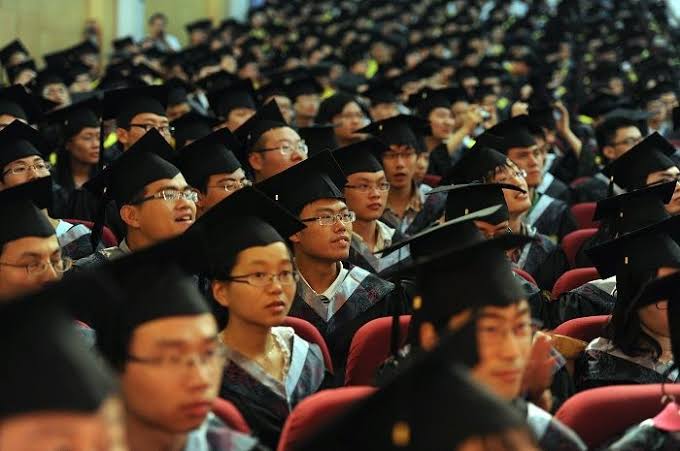
For foreign students, the simplest accommodation option is usually the university dormitory. Most large institutions have international student residences or separate buildings. Conditions can differ significantly: single, double, and multiple rooms are available.
The cost depends on the city, campus, and level of comfort. In some universities, a double room can cost several thousand yuan per year, while single apartments in large cities can be significantly more expensive.
Dormitories often include furniture, a bed, a wardrobe, a workspace, and a bathroom or access to a shared bathroom. Some residences may provide laundry services, kitchens, lounge areas, and internet access. Utilities such as electricity, water, internet, or bedding may need to be paid separately.
Renting an apartment off-campus provides more privacy, but it requires additional costs and documentation. Students need to consider a deposit, monthly rent, utility payments, agent fees, internet, and transport to the university.
For the first year of study, dormitory living is often the more practical option as it allows closer proximity to lecture halls, libraries, canteens, and the international department. After adaptation, some students switch to renting apartments.
Food in China can be relatively inexpensive, especially when using university canteens. There are usually several establishments on campus offering Chinese and partially international cuisine. The cost of food depends on the city, dish choices, and personal habits.
In large cities, daily expenses can be higher. Transport, rent, and restaurants in Beijing, Shanghai, or Shenzhen demand a larger budget than living in a medium-sized university city.
Students also need funds for mobile communication, internet, transport, clothing, household items, and study materials. To use many local services, it is convenient to have Chinese payment tools like WeChat Pay or Alipay, but the process of connecting them may depend on the bank and documentation.
It is important for foreign students to correctly register their residence address. When moving from a dormitory to an apartment, it is necessary to update registration data according to local rules. Ignoring such procedures may create documentation difficulties.
The overall budget should be formulated separately for each city. Student expenses in Beijing and Shanghai should not be directly compared with costs in mid-sized cities.
Studying in English and Chinese: language requirements and preparatory programs
In China, foreign students can study in both Chinese and English. The choice depends on the specialty and specific university. English-taught programs are especially common in economics, business, international relations, engineering, information technology, and certain natural science areas.
Studying in Chinese opens access to a significantly wider range of programs. A relevant level of HSK is required for admission. For bachelor's programs, HSK 4 is often used as a basic requirement, but some universities and specialties may require HSK 5 or higher.
For master's and doctoral programs, the requirements are usually higher, especially if the study involves writing scientific papers in Chinese. The specific level depends on the university and specialty.
English-taught programs are designed not only for citizens of English-speaking countries. Ukrainians can also enroll in them if they confirm a sufficient level of English proficiency. The most commonly accepted qualifications are IELTS or TOEFL, while some universities also recognize Duolingo and other international tests.
Typical requirements may include IELTS of 5.5–6.0 or TOEFL iBT of about 72–85, but the university has the right to set a different threshold. For prestigious programs, the requirements may be higher.
If an applicant does not have the necessary level of Chinese, the university may offer a preparatory language course. The duration depends on the initial level and program. After the preparation is completed, the student transitions to the main academic program if they meet the established conditions.
Language programs may serve as a separate area of study. For instance, some universities accept foreigners for semester or annual Chinese language courses. These may be paid or funded through scholarship programs.
It is important to consider that studying in English does not mean there is no need to know Chinese. In everyday life, during accommodation, shopping, and communication with administration and solving household issues, basic Chinese can be very useful.
At the same time, studying in Chinese requires systematic preparation. Even a high level of HSK does not always mean complete readiness for lectures on a complex specialty. Technical, legal, medical, or economic terminology requires additional processing.
For applicants, the choice of language of instruction should depend on long-term goals. If the main objective is to receive an academic education in an international language, then an English-taught program may be more convenient. If the goal is professional integration into the Chinese environment or further work with Chinese companies, studying in Chinese may require more time but offers a different level of language proficiency.
Employment and work during studies in China: opportunities for foreign students and established restrictions
A foreign student in China does not automatically have the right to work just because they are studying at a university. Chinese legislation delineates study and employment. Working without necessary permits may be regarded as illegal employment.
For students, work-study options are provided, meaning part-time work within an established work system during studies. However, a student cannot independently start working at any company without approval and proper arrangements.
If a student plans to work part-time or intern outside the university, they need to obtain approval from the educational institution and apply to the exit-entry administration to add relevant information to the residence permit. The document specifies the place and duration of work or internship.
Without such documentation, the student’s residence permit does not authorize work or internships outside the university. This rule is crucial, as a standard student visa is not a work permit.
For work within the work-study framework, time restrictions are established. Generally, during an academic semester, work should not exceed 8 hours per week and 40 hours per month. During winter and summer breaks, up to 16 hours per week and 80 hours per month is permitted.
Permitted formats may include assistantships, administrative, research, and other jobs organized or approved by the university. The educational institution must monitor to ensure that the part-time work does not interfere with the main studies.
Separate rules apply to internships. If the internship takes place outside the university, it also requires appropriate approval and recording information in the student residence permit.
Tourist, student, or other inappropriate visas cannot be considered as means for legal employment. For full-time work under an employment contract, the appropriate work status, work permit, and residency permit related to the employment must be obtained.
Violating these rules may have serious consequences: fines, cessation of residency rights, problems with extending documents, or other migration consequences. Therefore, students should not agree to informal employment merely because the employer offers quick payment without documentation.
A practical option is to consult with the international department of the university first. They can explain whether a particular type of part-time work is allowed, what documents are required, and how to include the necessary information in the residence permit.
Benefits and features of studying in China for Ukrainians: education, international experience, and future prospects
Studying in China offers the chance to obtain a diploma from a foreign university, learn Chinese, and gain experience living in a different cultural and economic environment. For Ukrainian students, this also provides an opportunity to build international contacts and better understand the Asian educational and professional space.
One of the important features is the vast selection of specialties. Chinese universities offer programs in engineering, information technology, economics, finance, medicine, international relations, logistics, design, natural sciences, and other fields.
A significant advantage for some applicants is the ability to study in English. This allows them not to spend several years achieving a high level of Chinese before starting the main academic program. At the same time, studying Chinese in parallel simplifies everyday life and expands communication possibilities.
Another feature is the varying cost of education. China has universities with relatively affordable programs and institutions with high fees. Thanks to scholarships, students may significantly reduce their expenses or obtain full funding.
For Ukrainians, it is essential to check the recognition of the future diploma in advance. If working in Ukraine or continuing education in another country is planned after graduation, it is necessary to clarify the requirements for the academic recognition of the document. This is especially important for regulated professions, where specific qualification requirements may exist.
A Chinese diploma does not automatically grant the right to work in China after graduation. For employment, a foreigner must meet migration and labor requirements. If a graduate plans to stay in the country, it is necessary to obtain the corresponding work status separately.
While studying, students have the opportunity to utilize university infrastructure: libraries, laboratories, sports centers, student organizations, and international programs. In large universities, representatives from dozens of countries study, creating a genuinely international environment.
An important component is adaptation. The Chinese education system may differ from the Ukrainian one in organizing the educational process, attendance rules, interaction with teachers, evaluation, and administrative procedures. Students need to be prepared for the fact that a significant part of daily issues is resolved through digital services.

Another feature is the need to carefully attend to migration documents. Passport, visa, residence permit, address registration, and student documents must remain valid. After changing addresses, passports, or educational status, this information may need to be updated.
Future prospects depend on the specialty, levels of Chinese and English, academic results, and professional plans. The study experience can be beneficial for work in international companies, Chinese enterprises, logistics structures, the IT sphere, foreign trade, translation, academic activity, and other areas.
For an applicant from Ukraine, it is important to approach the university selection comprehensively. It is necessary to compare the program, language of instruction, requirements, costs, scholarships, housing, city, and prospects after graduation. The combination of these factors defines the real practical value of studying.
In 2026, the admission preparation process became more demanding for some bachelor's programs due to the introduction of CSCA. Therefore, planning should start early: determining the specialty, taking a language test, preparing academic documents, completing necessary testing, submitting an application, and after enrollment, applying for a student visa.
For Ukrainians, studying in China can be a complete academic journey with the opportunity to obtain international education, language preparation, and professional experience. At the same time, successful studies depend on the right program selection, compliance with migration rules, realistic budget planning, and readiness for a different educational environment.
Overall, studying in China can be a good option for many. Therefore, it’s worth considering it in more detail: to examine all the conditions.

Read also