The Next Industrial Shift: AI, Robotics, and the Global Race for Dominance

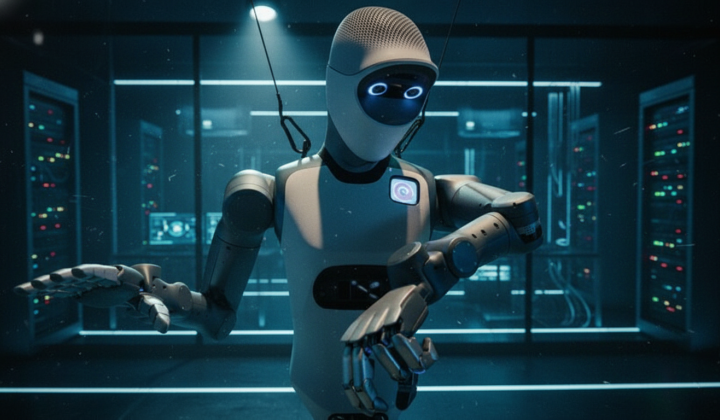
Paul Frayoli's Analysis of the Coming Industrial Transformation
According to ХВИЛЯ: In a recent analysis, Paul Frayoli, a Senior Fellow at the International Institute for Strategic Studies, examines the new industrial revolution driven by the convergence of key technologies. This shift is powered by artificial intelligence, battery storage, solar power, semiconductors, sensors, and electric motors. Frayoli highlights China's substantial lead in this arena, stemming from its advanced manufacturing capabilities and large-scale deployment of these technologies. A pivotal development noted is SpaceX's acquisition of xAI on February 2, 2026, with the strategic goal of deploying AI infrastructure in orbit by 2028. This move underscores the high-stakes, multi-domain nature of the current technological competition.
The Core Technologies Fueling Change
The revolution is propelled by foundational technologies experiencing exponential progress. For instance, large language models have been improving 21-fold every two years since 2010. Other critical components include:
- Lithium-ion battery packs, which have dropped from $1,500 per kilowatt-hour in 2010 to just $108.
- Solar panels, priced at $128 per watt in 1975, now cost a mere $0.26 as of 2024.
- Lidar sensors, once $75,000 in the early 2010s, are now available for under $200.
- Neodymium magnet motors have become at least ten times more powerful over two decades.
China has positioned itself at the forefront of this industrial shift. By 2024, it accounted for roughly 54 percent of the world's installed industrial robots. Furthermore, the nation generates nearly three times more electricity than the United States and processes about twice as much industrial raw material as the rest of the world combined. These figures illustrate China's strategic advantage in scaling new technologies and industrial production, a central concern for Western policymakers and businesses.
Frayoli also identifies significant social and cultural risks accompanying this revolution. SpaceX, for example, plans to deploy orbital solar arrays that are roughly five times more efficient than terrestrial ones. However, scaling advanced robotics faces substantial hurdles. As Elon Musk cautions:
“Mass production of robots faces obstacles related to real-world intelligence, hand mechanics, and manufacturing at scale.” - Elon Musk
Reflecting this challenge, Tesla's humanoid robot, Optimus, is not expected to enter serial production before late 2026.
In conclusion, the new industrial revolution, sparked by AI and related technologies, holds the potential to radically reshape the global economic order. Yet, it simultaneously presents profound societal challenges that demand careful scrutiny and international dialogue. Navigating this transition successfully will require unprecedented cooperation and adaptation to harness the benefits of innovation while mitigating its disruptive risks.

Read also