MRI Diagnostics Get a Boost from a Cutting-Edge Metamaterial Antenna

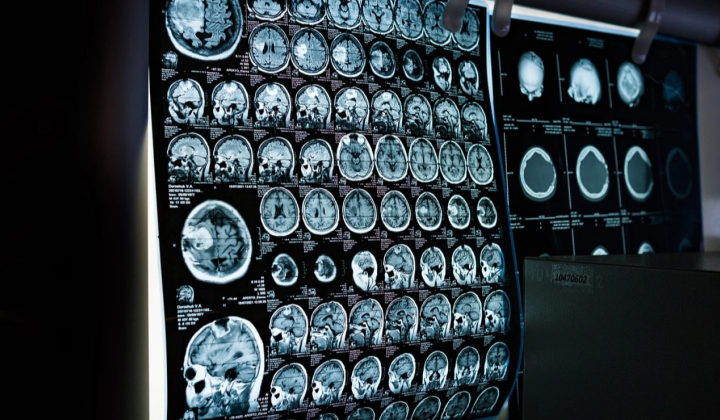
Breakthrough Antenna Design for Magnetic Resonance Imaging
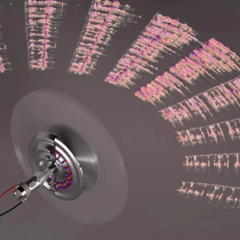
According to НВ — Техно: A global research team, led by Nandita Saha at the Max Delbrück Center, has unveiled an innovative antenna for magnetic resonance imaging (MRI) built from metamaterials. Their findings were published in the journal Advanced Materials. The new technology was tested on human volunteers using a 7.0 Tesla scanner, underscoring the advanced nature of this research. This is particularly relevant as higher-field MRI systems offer greater detail but pose unique engineering challenges.
Conventional radiofrequency coils often fall short when trying to capture strong signals from deep or anatomically complex regions. By incorporating metamaterials, the team significantly amplified the useful signal, improved spatial resolution, and accelerated data acquisition. A key advantage of this invention is its full compatibility with existing medical hardware, which could greatly simplify its adoption into clinical settings.
Potential Clinical Applications
The new antenna can more precisely direct radiofrequency energy for thermal tumor ablation, while also shielding sensitive areas-such as regions near medical implants-from unwanted heating. Its compact and lightweight design enhances patient comfort and shortens the time spent inside the scanner.
Possible applications for this technology include:
- Ophthalmology
- Neurosurgery
- Oncology
The researchers plan to adapt the technology for imaging the heart and kidneys, and to launch large-scale clinical trials at multiple hospitals. These steps open up new possibilities for improving medical diagnosis and patient treatment.
This MRI antenna development marks a significant leap forward in medical technology, as it has the potential to substantially enhance the quality of diagnostics and therapy for a range of diseases. Integrating this innovation into routine clinical practice could allow doctors to obtain sharper images and deliver more effective treatments, particularly in oncology. Future clinical trial results are expected to confirm the practical value of this technology and its potential for widespread medical use.
As advancements in medical imaging continue, the development of innovative diagnostic tools is becoming increasingly crucial. For instance, a recent breakthrough in oral cancer detection has led to a new one-hour test that boasts over 95% accuracy. This development complements the progress seen in MRI technology, showcasing how enhanced diagnostic methods can significantly improve patient outcomes. To learn more about this promising test, visit this article on oral cancer detection.

Read also