How Outdated Voting Rules Undermine Ukrainian Apartment Buildings and Who Exploits Them


Governance Challenges in Homeowners' Associations
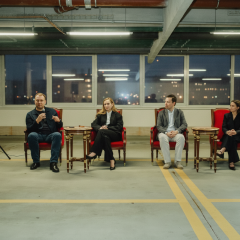
According to ХВИЛЯ: During a broadcast with political analyst Yuriy Romanenko, property management professional Olga Rublova addressed the persistent issues facing Ukraine's Associations of Co-Owners of Apartment Buildings (OSBB). She highlighted an antiquated voting system, manipulation by certain residents, and the urgent need to adopt digital solutions for OSBB management.
While new regulations now allow decisions to pass with a simple majority of 50% plus one vote, Rublova pointed out that the procedure for collecting written ballots from absentees remains archaic. Association heads are given just 15 days to conduct this written poll, creating significant logistical hurdles. She emphasized that, by law, the majority's decision is binding for all co-owners. However, Rublova warned that a court could invalidate an entire vote due to a single missed comma or an improperly delivered 14-day notice, paralyzing the decision-making process.
Obstacles and Resident Manipulation
Rublova further explained the practical barriers to collecting written votes, as residents may not answer their doors, have moved abroad, or refuse to sign.
"This written polling is 'hell' for an OSBB head. You have 15 days to reach everyone... But people don't open their doors, people have gone abroad, people simply 'don't want to' because they think if they don't sign, they won't have to pay for something,"
she noted.
Additionally, Rublova stressed the problem of manipulation by individual residents who can mislead other co-owners.
"Every building has that one person... who knows 'what's best' but never does anything themselves. They manipulate other co-owners, spreading stories that the OSBB head is 'stealing' or that a 'secret mining center' was installed in the basement,"
she stated.
To improve OSBB governance, Rublova insisted on the critical importance of digitization: "Digitalization is the only way forward. Running around with papers in the 21st century, when half the building's residents are in Poland or Germany, is simply impossible."
Political analyst Yuriy Romanenko also argued that responsibility for OSBB situations is shared between the state, city authorities, and the association heads themselves.
"The state is at fault, the mayor is at fault, the OSBB head is at fault. And the fact that we ourselves can't get together and vote on some elementary issue-well, 'we're just too busy',"
he remarked.
These discussions underscore that OSBB governance problems remain pressing, demanding new approaches and solutions for the effective operation of these homeowner communities. The challenges outlined by Olga Rublova reflect widespread difficulties across Ukraine. The push for digital management tools highlights a necessary adaptation to modern realities, which could streamline procedures and reduce opportunities for resident manipulation. The shared responsibility of all parties also points to the need for greater resident engagement in matters affecting their living environment.

Read also