Boost Productivity by 14%: Five Proven Models for Employee Engagement

The Critical Role of Employee Engagement
According to Achievers: Employee engagement is a cornerstone of effective organizational management, directly influencing team motivation and output. Recent data reveals a significant challenge: the latest Engagement and Retention Report indicates that only 26% of employees feel genuinely engaged at work. This widespread disengagement poses a serious risk to company performance. Gallup research underscores the high stakes, showing that highly engaged business units experience 78% fewer absenteeism incidents and achieve a 14% increase in productivity. In response to these findings, organizations are increasingly turning to structured engagement models to drive improvement.
Five Key Engagement Frameworks
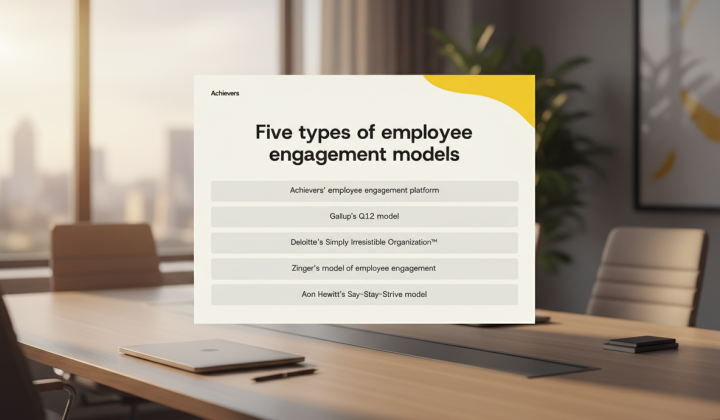
Among the most widely adopted strategies, five core models stand out for their structured approaches:
- The Achievers Employee Engagement Platform.
- The Gallup Q12 Model, which organizes engagement along a clear progression: basic needs, individual contribution, team belonging, and growth.
- The Deloitte Simply Irresistible Organization Model, built on five pillars: meaningful work, a supportive environment, hands-on management, growth opportunities, and trust in leadership.
- The Zinger Model, which incorporates the CARE framework covering Connection, Authentic Relationships, Recognition, and ongoing Engagement.
- The Aon Hewitt Say-Stay-Strive Model, identifying six core elements that shape engagement: foundations, company practices, the work itself, leadership, performance, and brand.
Recognition plays a pivotal role within these frameworks. According to the State of Recognition Report, employees who receive acknowledgment at least monthly are twice as likely to feel engaged and are less inclined to seek employment elsewhere. The Aon Hewitt model further defines three key engagement behaviors: Say (advocating for the company), Stay (retaining employment), and Strive (exerting extra effort). In today's competitive talent market, effectively applying these models is not just an HR initiative but a strategic business imperative. The evidence is clear: a deliberate focus on engagement can substantially boost employee output and, consequently, enhance overall organizational results.
Fostering employee engagement and recognition is essential for ensuring an organization's stability and long-term growth. As workforce dynamics continue to evolve, companies must proactively refine their people management strategies to retain top talent and maximize efficiency. Implementing these proven engagement frameworks can be a decisive factor for success, providing a structured path to building a more committed and productive workforce.

Read also