Microbial life sealed beneath Antarctica's Blood Falls emerges after millions of years of isolation

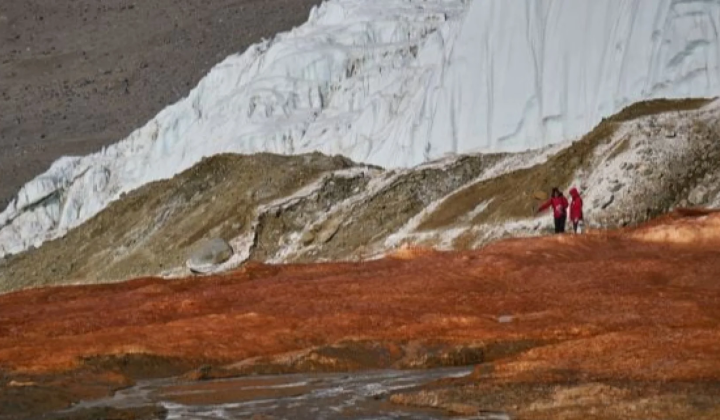
The Blood-Red Waterfall
According to НВ — Техно: August 4, 12:30
Beneath Taylor Glacier in Antarctica, researchers have uncovered a community of eukaryotic microorganisms that has been sealed off from the outside world for millions of years. The organisms inhabit a salty brine that flows to the surface as Blood Falls, a striking blood-red outflow. Blood Falls is a dramatic natural feature, yet the ecosystem hidden beneath it has remained largely mysterious. The research team, led by microbiologist Angela Zoumplis from the University of California, San Diego, was drawn to this remarkable habitat because it may be a living descendant of an ancient marine ecosystem - one that became trapped under the glacier when the valley was flooded by the sea long ago.
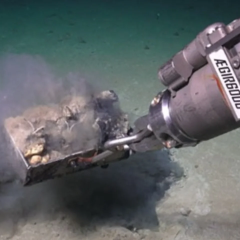
To investigate, the team collected 167 samples, including ice, silt, sedimentary rocks, and nearby water bodies. They then used RNA analysis to tell apart active organisms from leftover genetic material.
A Unique Community of Microorganisms
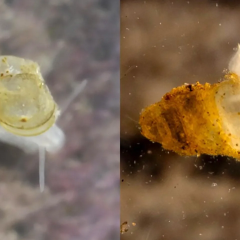
The analysis revealed a distinct eukaryotic community containing:
- diatoms
- dinoflagellates
- haptophytes
- ciliates
According to the researchers, these organisms could not have arrived by chance as wind-borne species from the sea. Their genetic features indicate a long period of separation from modern marine relatives. The leading hypothesis is that they are descendants of a marine ecosystem that became isolated when the ice sheet formed over the region.
The deep red color of Blood Falls comes from brine saturated with dissolved iron. When the brine meets oxygen, the iron oxidizes and produces the waterfall's characteristic crimson hue. Because the subglacial brine never froze, it may have acted as a natural refuge, enabling some organisms to survive harsh periods in a dormant state.
If this hypothesis is confirmed, Blood Falls could become one of the few places on Earth where living descendants of an ecosystem that existed before Antarctica's modern ice cover have endured. The findings open up new possibilities for understanding how life evolves under extreme conditions.
The discovery beneath Taylor Glacier highlights the value of studying isolated ecosystems, which can offer important insights into life's evolution on Earth. With climate change causing glaciers to melt, this kind of research may prove essential for learning how microorganisms adapt to extreme environments and what survival mechanisms they use. It also has implications for astrobiology, as similar environments may exist on other planets.
The discovery of a unique microbial community beneath Antarctica's Blood Falls raises intriguing questions about other hidden ecosystems on Earth. For instance, a similar investigation has revealed a thriving ecosystem located 500 meters below the Great Lakes, showcasing how isolated environments can harbor life forms adapted to extreme conditions. To learn more about this fascinating ecosystem, visit the hidden ecosystem beneath the Great Lakes.

Read also