Performance management – what is it and how to manage employee performance

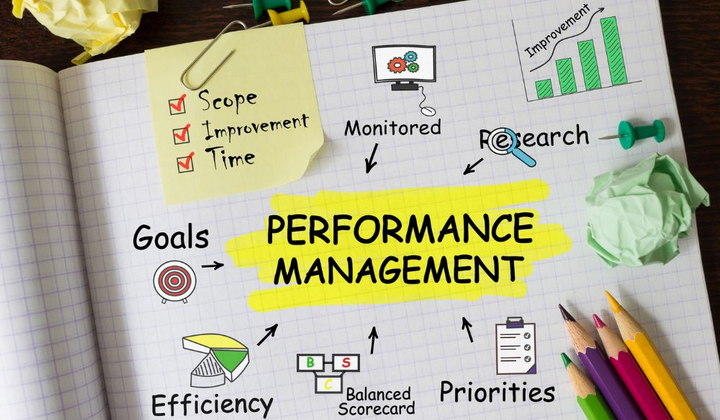
Employee performance management has become one of the key areas of work for modern companies in recent years. After all, it is almost impossible to work cohesively without additional tools.
In a competitive business environment, it is no longer enough just to hire qualified workers – it is necessary to constantly support their productivity, help them develop, adapt to changes, and work purposefully.
Performance management allows for building a systematic approach to evaluating employee work, setting goals, correcting behaviors, and developing competencies.
What is performance management and what role does it play in a company?
It is not a one-time procedure, but a continuous process that is integrated into the overall strategy of the company and affects all aspects of interaction between a manager and an employee. A well-set performance management system helps not only to increase efficiency but also to create a healthy atmosphere where each employee understands their tasks and sees their place in the long-term development of the organization.
Performance management is a systematic process that includes planning, tracking, analyzing, and correcting employee work. Unlike traditional approaches that involve evaluation only once or twice a year, performance management functions continuously. It creates a foundation for organized interaction between the employee and the manager, where discussions about goals, expectations, and results are a regular practice, not an exception.

Its key role in the company is to form a transparent work system that allows employees to understand what is expected of them. This reduces misunderstandings, helps avoid duplication of processes, increases accountability, and improves team interaction. Moreover, performance management allows the company to quickly identify changes in productivity, respond to problems promptly, suggest individual development strategies, and ensure objectivity in making personnel decisions.
As a tool of strategic management, performance management also supports long-term business goals. This allows for synchronizing individual employee tasks with the global priorities of the company, which enhances overall efficiency and enables the optimal use of resources.
How performance management differs from performance evaluation
Despite the fact that the terms 'performance management' and 'performance evaluation' are often used as synonyms, there is a significant difference between them. Performance evaluation is a separate procedure, usually formal, that involves analyzing work results over a certain period. Most often, it is conducted once a year or every six months and aims to clarify how well an employee has completed the assigned tasks.
In contrast, performance management includes performance evaluation but is not limited to it. It is a broader management system that takes into account behavioral factors, competency development, motivation, managerial expectations, and even the emotional state of the employee. Thus, performance evaluation is just one component of a larger, multi-level process.
Another important distinction is regularity. Evaluation usually occurs at specific points in time, while performance management involves a continuous cycle: goal setting, interim discussions, task correction, feedback provision, coaching, and creating conditions for development. Instead of merely recording results, the company constantly works with the employee: it suggests, corrects, motivates, provides resources, and tracks progress.

Thus, performance management is not a one-time act, but a dynamic system that creates a foundation for long-term and predictable collaboration between the company and its staff.
Key stages and tools of performance management
The performance management system consists of several key stages, each playing its significant role. The first is goal setting. At this stage, the manager and the employee jointly identify priorities for a certain period. Companies usually use SMART or OKR methodologies, which allow for formulating clear, measurable, and achievable goals.
The second stage is continuous monitoring and interim meetings. These are informal or formal conversations during which the current state of work, difficulties encountered, and changes in priorities are discussed. The regularity of such meetings prevents the accumulation of problems and allows for timely course corrections.
The third stage is providing feedback. It can be either positive or corrective. Feedback is a key element that allows an employee to understand how the manager evaluates their work, what needs to be improved, and which strengths should be developed.
The fourth stage is the evaluation of results. A formal final evaluation may include scales, competency models, self-assessments, or comparisons with target indicators. Importantly, the evaluation is based on objective data rather than subjective emotions.
The fifth stage is developing a development plan. Based on the evaluation, the company forms an individual strategy for skill enhancement, which may include training, mentoring, involvement in projects, or changes in the area of responsibility.
All these stages are supported by tools: HRM systems, goal trackers, surveys, competency models, analytical dashboards, and development programs.
How performance management is implemented in a company

Implementing a performance management system requires careful preparation and a well-thought-out strategy. The first step is to determine which model the company plans to use: purely behavioral, competency-based, mixed, or results-oriented. It is important that the chosen model aligns with the culture and scale of the organization.
Next, a performance management policy is formed, which includes a description of the processes, criteria, frequency of evaluations, and standards of feedback. For the system to work, it is necessary to prepare the managers – training them to provide feedback, conduct regular meetings, and work on employee development.
The third stage is launching the tools. This could be a specialized HR platform that allows setting goals, keeping meeting logs, storing evaluation results, and building individual development plans.
It is very important to communicate changes to employees: explaining why the system is being implemented, how it will work, what will change for everyone, and what opportunities will arise. The acceptance and trust of employees depend on the transparency of communications.
At the final stage, the effectiveness of the system is analyzed, tools are corrected, and processes are improved. The performance management system cannot be 'once and for all' – it adapts to changes in the company, market, and environment.
The impact of performance management on employee productivity and motivation
Properly implemented performance management can significantly increase employee productivity levels and enhance their internal motivation. First of all, it provides transparency: the employee knows exactly what work needs to be done and what criteria will be used to evaluate it. Clarity of expectations reduces stress and simplifies planning.
Secondly, regular feedback helps the employee see their progress, recognize strengths, and promptly correct mistakes. This creates a sense of support and engagement, as well as boosts confidence in their own abilities.
Thirdly, performance management is closely related to competency development. Employees understand that the company is interested in their professional growth, invests in training, and creates opportunities for career advancement. This significantly enhances loyalty and reduces the desire to change jobs.
Moreover, an effective performance management system fosters team accountability. When employees' goals are aligned with departmental and company-wide goals, the team works more cohesively. This increases decision-making speed, enhances interaction, and reduces conflict.

Ultimately, performance management is one of the strongest productivity-enhancing tools as it creates an environment where employees have a clear direction, receive regular support, and see meaning in their tasks.
Examples of successful implementation of performance management
Successful implementation of employee performance management systems can be observed in many well-known companies across various industries. One vivid example is Google, which uses its own OKR (Objectives and Key Results) system. Each employee sets specific and measurable goals that align with the company’s global priorities. Regular interim progress checks and feedback from management allow for immediate task adjustments and competency development. This increases employee engagement and fosters innovation, leading to quick results.
Another example is Netflix, where performance management is integrated into corporate culture. The company employs the principle of regular discussions about performance, individual goals, and mutual expectations. Employees receive continuous feedback not only from direct supervisors but also from colleagues and subordinates. This approach ensures transparency and helps quickly identify problem areas, correct strategies, and shape the professional development of employees.
In the manufacturing sector, a successful example is Toyota. The company has implemented a system that combines performance evaluation with training and continuous process improvement (Kaizen). Employees regularly discuss their results, suggest improvements, which directly impact production efficiency and cost reduction. Performance management here operates as an integrated system, stimulating accountability, development, and employee engagement.
In small-scale startups and IT companies, performance management helps to quickly adapt to market changes and optimize work processes. For instance, at Spotify, the performance management system involves quarterly goal setting, regular one-on-one meetings, and evaluating interaction quality within teams. This supports a high pace of innovation and ensures a balance between individual achievements and teamwork.
Another successful example is Unilever, where performance management is integrated with talent development programs. Employees undergo regular competency assessments, receive individual training plans, and opportunities for career growth. As a result, the company maintains high employee motivation, reduces staff turnover, and increases overall business process effectiveness.
Mistakes in the implementation and conduct of performance management
Despite undeniable advantages, implementing a performance management system is often accompanied by mistakes that diminish its effectiveness. One of the main issues is the lack of transparency in the process. If employees do not understand the criteria by which their work is evaluated, they feel unfairness and a decrease in motivation. Incomplete explanation of goals and expectations can lead employees to perform tasks formally rather than effectively.
Another common mistake is focusing only on end results without taking into account the process and competency development. As a result, employees feel pressure and fear errors, while managers receive only surface performance metrics. In an ideal system, not only results are evaluated but also work approach, participation in team processes, and the ability for self-development.
Mistakes may also arise from the system’s mismatch with corporate culture. For example, implementing strict evaluations in a company that has a horizontal structure and democratic decision-making can lead to conflicts, loss of trust, and reduction in engagement. Additionally, insufficient training for managers who conduct evaluations and provide feedback is crucial. An unqualified manager may provide biased or unclear feedback, undermining trust in the system.
Another mistake is infrequent or formal evaluations. If meetings occur only once a year, employees do not receive timely information about their progress, do not know what they need to work on, and lose motivation. Successful companies conduct regular interim assessments that allow for quick responses to changes and maintain productivity.

It is also essential to avoid underestimating cultural and psychological factors. For instance, providing strict feedback without regard to the emotional state of the employee can reduce effectiveness and induce stress. Performance management is not just a technical process but also a development tool that requires delicate handling of people.
Ultimately, mistakes in the implementation and conduct of performance management can lead to decreased motivation, increased staff turnover, and conflicts within the team. Therefore, when developing the system, it is important to consider corporate culture, train managers, ensure transparency, regular evaluations, and an individual approach to employee development. Only by adhering to these principles will the system work effectively, helping the company achieve strategic goals and maintain a high level of employee engagement.

Read also